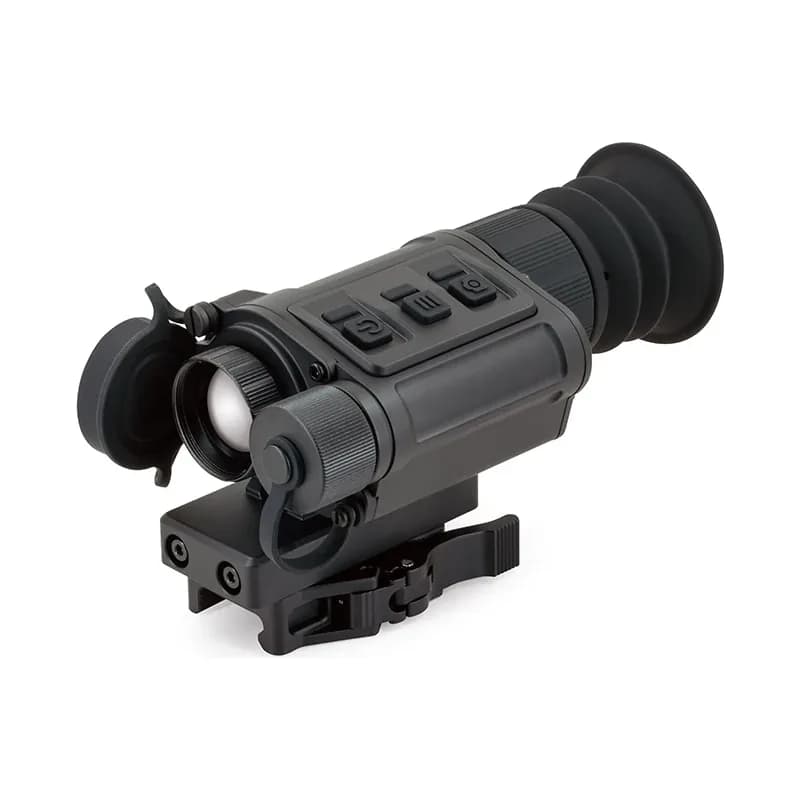
iRayUSA quotes 1,260 m, 2.4× our figure, because makers usually measure against a person’s full height rather than their width. Why the numbers differ
iRayUSA RICO Micro V2 RL25
- Approx. price
- ~$3,749
- Sensor
- 384×288 · 12 µm
- Lens
- 25 mm · 2×
- Weight
- 11.3 oz
Price and availability on iRayUSA’s site may differ.
A dedicated night rifle for hogs and coyotes inside about 150 yards
01Specifications
As published by iRayUSA. Sources: irayusa.com.
- Sensor
- 384×288
- Pixel pitch
- 12 µm
- NETD
- ≤18 mK
- Refresh rate
- 60 Hz
- Lens
- 25 mm
- Digital zoom
- up to 4×
- Field of view
- 10.5° horizontal
- Display
- 1440x1080 AMOLED
- Claimed detection
- 1,260 m
- Claim basis
- unspecified
- Run time
- 6.5 h
- Battery type
- 18650
- Weight
- 11.3 oz
- Length
- 4.5″
- Records video
- Yes
- Wi-Fi
- Yes
- IP rating
- IP67
- Warranty
- 5 years
- Country of origin
- China
- Approx. price
- ~$3,749
02Pros and cons
From the published specs. What owners report is in the next section.
- Sensitive sensor that picks out small heat differences on humid or rainy nights (56th-best of 285 that publish it)
- Smooth 60 Hz picture on a running animal
- Takes 18650 batteries you can swap in the field
- Light at 11.3 oz, the lightest of the 194 riflescopes here
- Waterproof (IP67), survives a dunking
- Records video and connects to a phone app
- Warranty: 5 years
- Short 25 mm lens: a wide view, but less reach than a 50 mm scope
- No rangefinder, so you judge distance by eye
- Entry-level 384×288 sensor, with less detail than a 640
03What owners say
owner discussions, 2023–2026Summarised from 9 public owner discussions between 2023 and 2026. Owner experience, not a measurement; owners rarely distinguish the RICO Micro RL25 variants, so this covers the family.
The RL25 is the 384-core sibling of the RH25 at roughly 40 percent less, and the discussions are mostly about what that discount costs you. The honest answer from people who have both is 'everything except the rifle': as a weapon-mounted thermal it does nearly the same job as the RH25 for far less, and one owner calls it the better buy on that basis. As a helmet unit it is a different story. The 2x base magnification gives about a ten-degree field of view, which a dealer and several owners say is too narrow to walk around in, and one owner's unit had no 1x helmet mode at all, so it could not be collimated against a PVS-14 on a bridge. He had bought it for exactly that and posted a warning.
Owners separate V1 from V2 here more than they do with the RH25, so some of this is dated. The V2 has a digital 1x helmet mode that shrinks the image in the eyepiece, which one owner finds workable with both eyes open, and it is sold with a clip-on mode the V1 lacks; V1 owners who clip it in front of an LPVO run it in dedicated-scope mode and aim with the thermal's own reticle. V1 owners also describe the battery arrangement as poor next to the current one, with an external pack making the rifle heavy. V1 units cleared out at $1,799 in late 2024 and the V2 has been discounted by about a third at holiday sales.
- Does the rifle-mounted job of an RH25 for about 40 percent less; an owner of both calls it the better value if the helmet is not part of the plan.
- Same mount family as the RH25, so pictail, MQD, SBR rail, ADM QD and the newer flip-to-side mount all fit, and a tool-less swap to a buddy's rifle is realistic.
- V2 adds a shrunken 1x helmet view and a proper clip-on mode; the one V2 owner describing the helmet mode says it works with both eyes open.
- A poor bridge partner for a PVS-14: one owner's unit had no 1x helmet mode and he posted a warning after buying it for that purpose; a V2 owner replied that the V2 has one, but it shrinks the image rather than changing the optics.
- Ten-degree field of view at 2x is too narrow to navigate by; owners and a dealer both say to keep it in a pouch or on the rifle and bring it up to scan while stopped.
- V1 cannot be collimated as a clip-on, so in front of an LPVO you ignore the scope's reticle and aim with the thermal's; behind a red dot it sits too far from the eye and the field of view suffers.
- V1 battery setup is described as awful next to current units, and an external pack makes the rifle front-heavy; it also sits too far forward on a standard bolt-gun rail without a cantilever mount.
RL25 or RH25?
If it is going on a rifle, an owner who has both says the RL25 does nearly the same job for far less. If it is going on a helmet beside night vision, buy the RH25: the RL25's 2x base and, on at least the V1, the missing 1x mode make it a poor bridge partner, and one owner posted a warning after finding that out the hard way. Owners who want a helmet thermal in this price range are more often pointed at the StingIR.
Can I use it as a clip-on in front of my LPVO?
The V2 is sold with a clip-on mode. V1 owners make it work by switching to dedicated-scope mode, zeroing the digital reticle, and looking through the LPVO at the RL25's screen while ignoring the scope's reticle entirely. One owner using a flip-to-side mount this way does not bother with digital zoom at all because the LPVO already magnifies the screen.
Will it work on a bolt gun?
Not well with the stock mount; a father and son sharing one found it sat too far forward to shoot comfortably. ADM makes a short cantilever that needs its own shoe, and a dealer pointed to the newer flip-to-side mount, but owners agree it is designed around an AR rail.
04Compare the RL25
05Related units
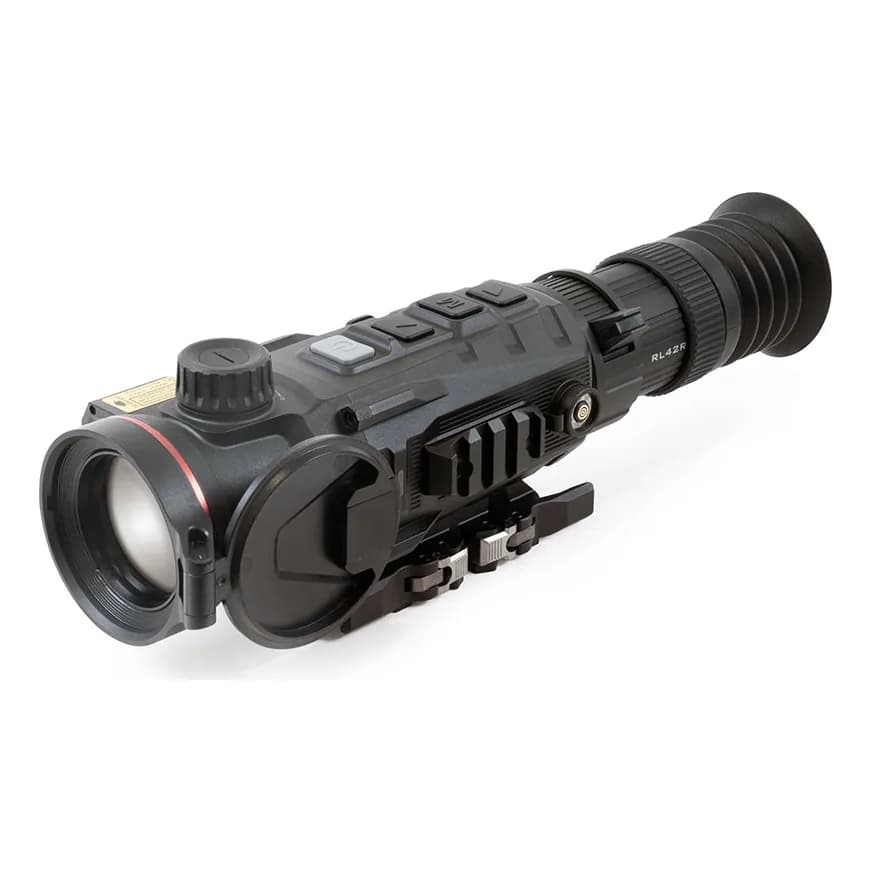
iRayUSA RICO Mk2 RL42R
- Sensor
- 384×288
- Pitch · Hz
- 12 µm · 60
- Lens
- 42 mm
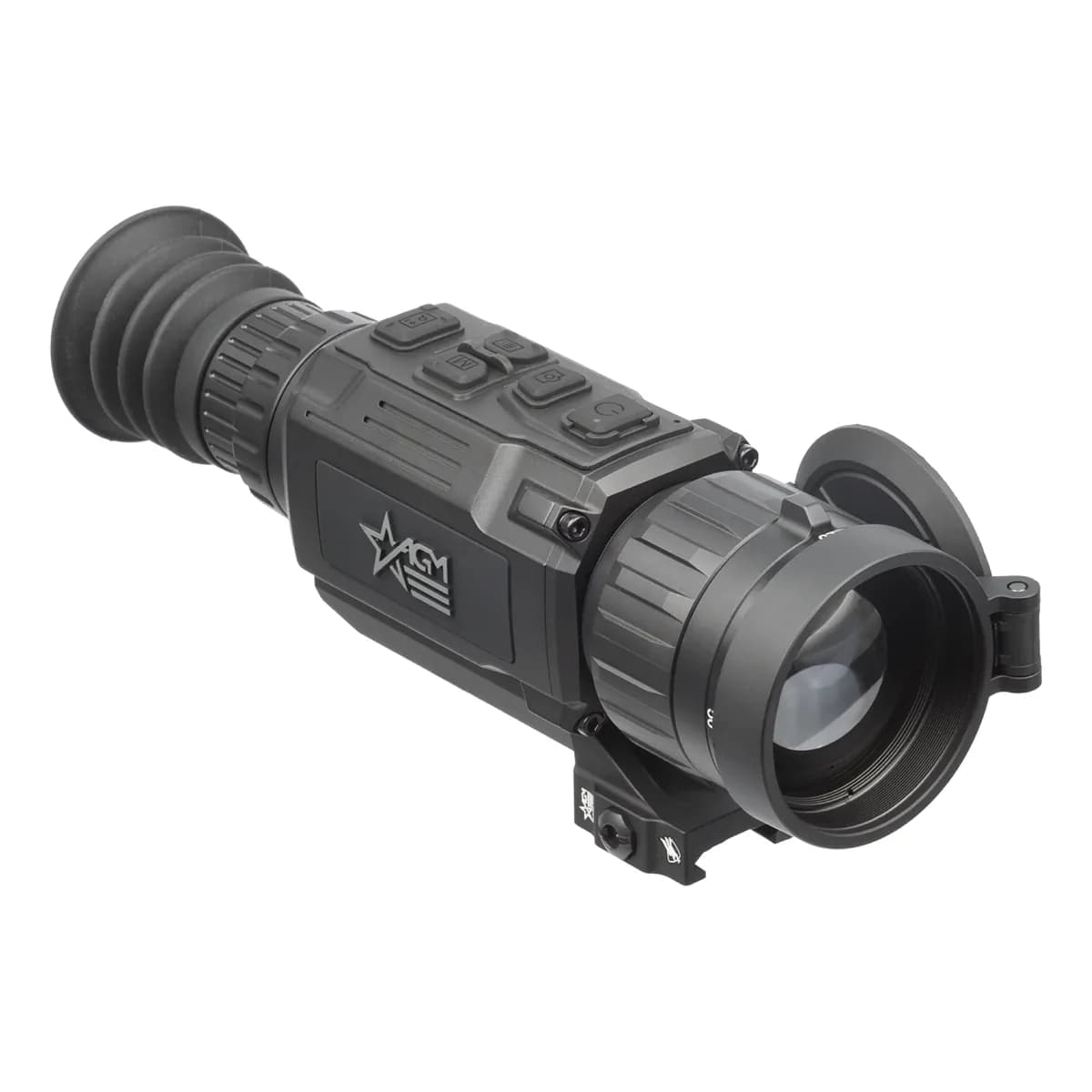
AGM Clarion 384
- Sensor
- 384×288
- Pitch · Hz
- 12 µm · 50
- Lens
- 25 mm
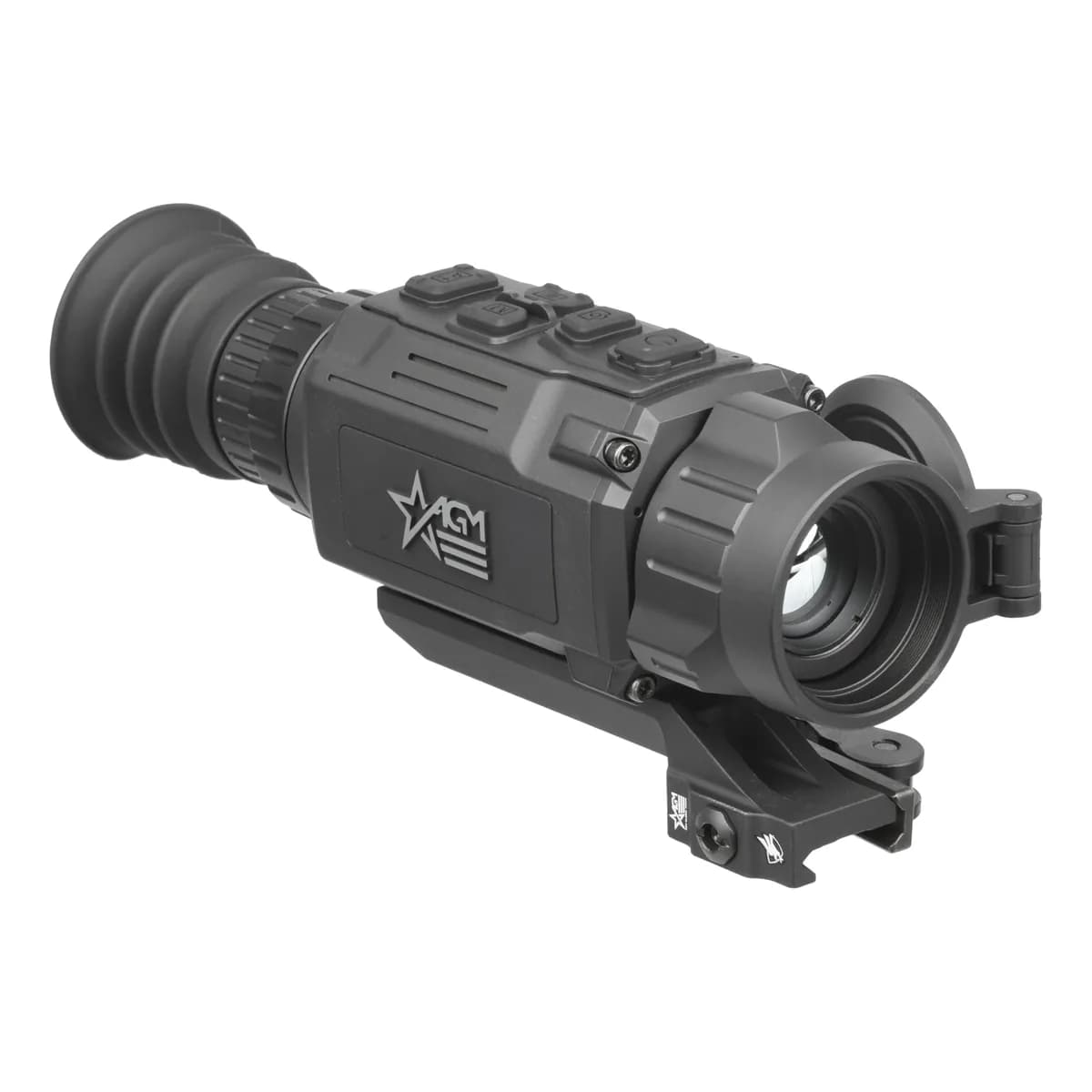
AGM Rattler V2 25-384
- Sensor
- 384×288
- Pitch · Hz
- 12 µm · 50
- Lens
- 25 mm