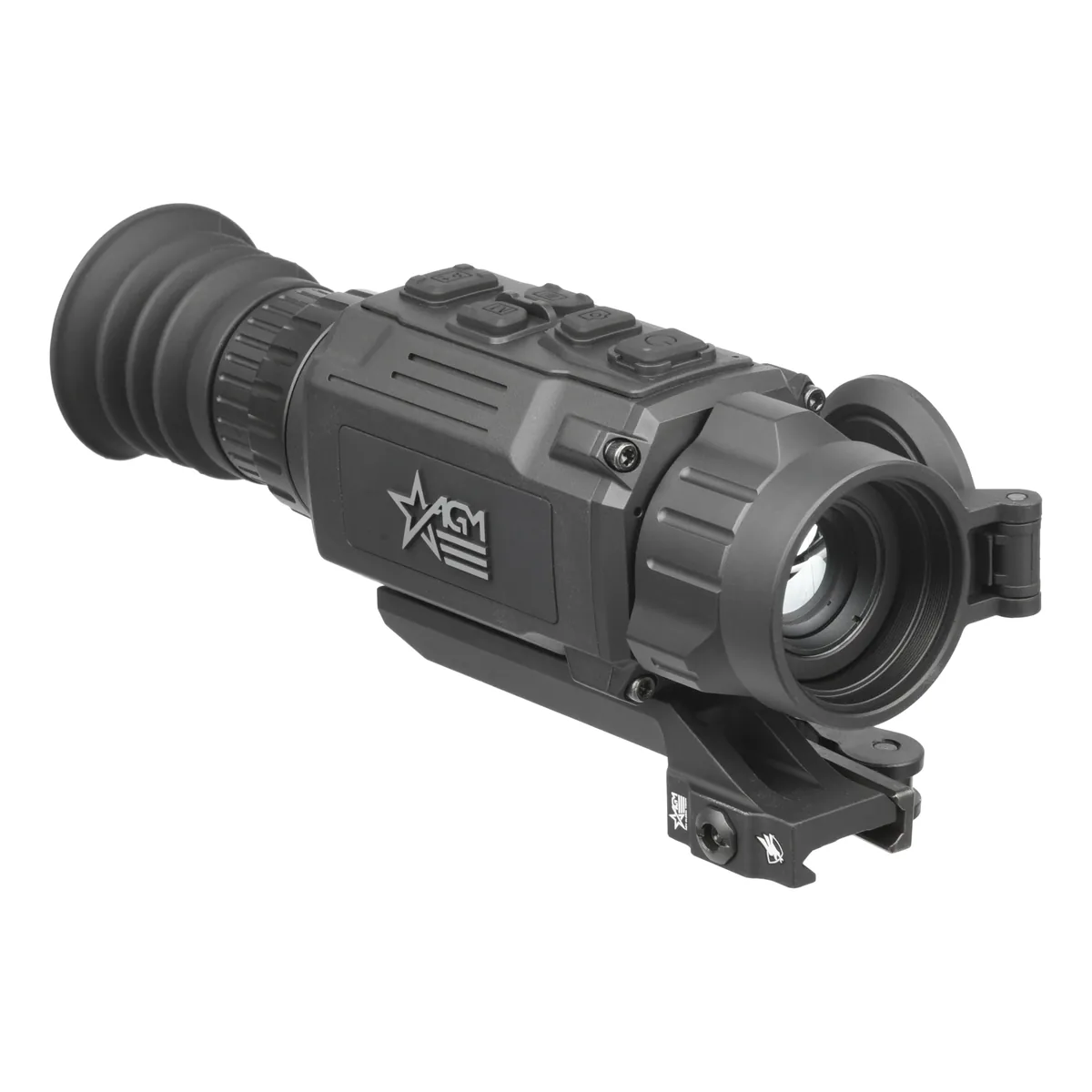
AGM Global Vision quotes 1,200 m, 2.3× our figure, because makers usually measure against a person’s full height rather than their width. Why the numbers differ
AGM Rattler V2 25-384
- Approx. price
- ~$1,545
- Sensor
- 384×288 · 12 µm
- Lens
- 25 mm · 2×
- Weight
- 17.3 oz
Price and availability on AGM Global Vision’s site may differ.
A dedicated night rifle for hogs and coyotes inside about 150 yards
01Specifications
As published by AGM Global Vision. Sources: agmglobalvision.com (product page, 2026 catalog), downloads.agmglobalvision.com (datasheet).
- Sensor
- 384×288
- Pixel pitch
- 12 µm
- NETD
- <20 mK
- Refresh rate
- 50 Hz
- Lens
- 25 mm
- Digital zoom
- up to 16×
- Field of view
- 10.5° horizontal
- Display
- 1024x768 OLED
- Claimed detection
- 1,200 m
- Claim basis
- 6 ft (1.8 m) object
- Run time
- 11 h
- Battery type
- Removable pack
- Weight
- 17.3 oz
- Length
- 8.6″
- Records video
- Yes
- Wi-Fi
- Yes
- IP rating
- IP67
- Warranty
- 5 years
- Approx. price
- ~$1,545
02Pros and cons
From the published specs. What owners report is in the next section.
- Sensitive sensor that picks out small heat differences on humid or rainy nights (104th-best of 285 that publish it)
- Swappable battery pack, so a spare doubles the run time
- 11 h of battery, 21st-longest of 344 here
- Light at 17.3 oz, 21st-lightest of the 194 riflescopes here
- Waterproof (IP67), survives a dunking
- Records video and connects to a phone app
- Warranty: 5 years
- Short 25 mm lens: a wide view, but less reach than a 50 mm scope
- No rangefinder, so you judge distance by eye
- Entry-level 384×288 sensor, with less detail than a 640
- Zoom past 2× is digital and gets blurry
03What owners say
owner discussions, 2023–2026Summarised from 17 public owner discussions between 2023 and 2026. Owner experience, not a measurement.
This is the scope a lot of people start thermal hunting with, and the owner reports read that way: hogs and coyotes inside 150 yards, a few longer shots out to about 300 yards, and a steady stream of first-kill posts. A second-year owner says it does everything he needs for hogs even though he wants to upgrade eventually. Some of the longer-range and older reports come from owners of the first-generation TS25-384, which they treat as the same scope with an older sensor.
The complaints are consistent too. Clarity falls off quickly as you zoom, the stepped zoom has to be cycled through, and several owners say they wish they had stretched to a 640. Two new V2 owners had screens full of dead pixels that came back after every shot; AGM replaced one in about three weeks, and owners send people to AGM directly rather than the dealer. Owners who moved on say the wide field of view is the thing they miss.
- Enough scope for hogs and coyotes at typical ranges: owners report clean kills from about 50 to 300 yards, and a first-generation owner identified a bobcat at 100 yards.
- The wide field of view helps when it is your only thermal; an owner who moved up to a 35-640 says he misses how much the 384 showed him.
- AGM's support gets consistent praise: one owner's defective unit was emailed in, shipped the next day and replaced within about three weeks, through a US phone line rather than the dealer.
- Cheap to get into: owners and sellers put new units around $1,600 to $1,800 on sale and used ones around $1,000 to $1,500, and the warranty transfers with the scope.
- Small enough that one owner compares it to a PVS-14 with the eyecup and mount off, and others hand it to hunting partners as a loaner or monocular.
- Image clarity drops noticeably as you zoom in, which both a one-year owner and a brand-new owner point out, and one owner says the zoom steps have to be cycled through rather than turned.
- Dead pixels out of the box: two new V2 owners report screens covered in them, and one says they came back with the recoil of every shot even after pixel correction.
- Several owners say they wish they had spent the extra on a 640, and one who upgraded to an Adder 35-384 with the same sensor called the bigger screen and magnification a huge step up.
- A coyote-hunting owner who films his hunts says AGM scopes in general have a stuttering problem on video, and another's attempt to record through the AGM app did not work.
- It uses AGM's own rechargeable battery; one owner steers buyers toward the Varmint LRF version partly because it takes common 18650 cells.
25-384 or 35-384?
Owners split by terrain. In woods and inside about 150 yards they prefer the 25 mm for its wider view, which matters when it is your only thermal; owners who shoot open pasture at 300 yards say the 35 mm's higher base magnification shows noticeably more detail. A few say to look for a used 640 at the same money instead.
My new scope has dots all over the screen. Is that normal?
No. Owners say a handful of dead pixels can be cleared with the pixel-correction menu, but a screen full of them, or ones that return after each shot, means a bad sensor. One owner with exactly this sent it straight to AGM and had a replacement in about three weeks.
Why is it so hard to see my target when zeroing during the day?
Owners explain that on a hot day everything is the same temperature, so a paper target disappears. They zero with aluminium tape, a hand warmer, an ice pack or a torch-heated screw on the target, or wait for early morning or late night when there is more contrast.
04Compare the 25-384
05Related units
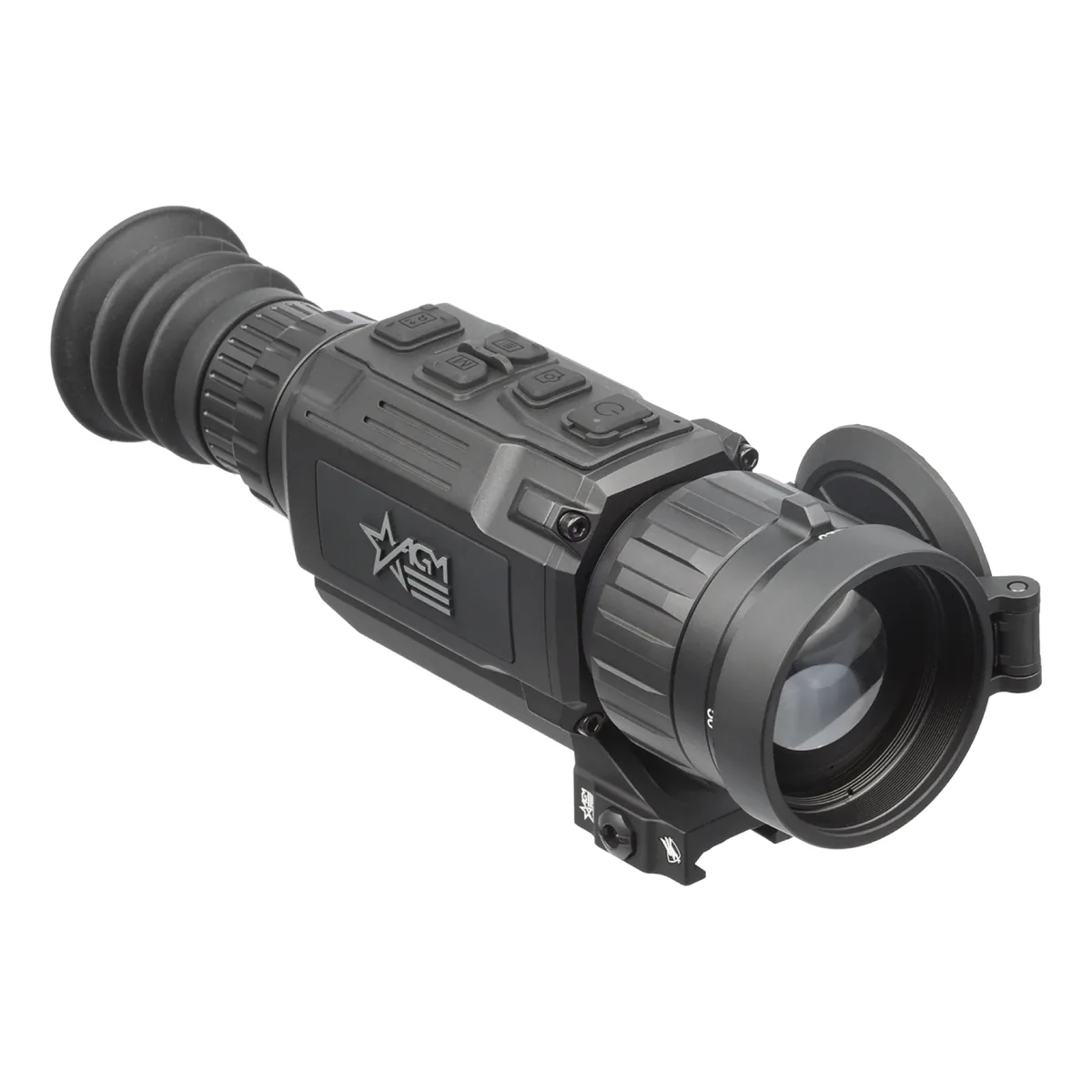
AGM Clarion 384
- Sensor
- 384×288
- Pitch · Hz
- 12 µm · 50
- Lens
- 25 mm
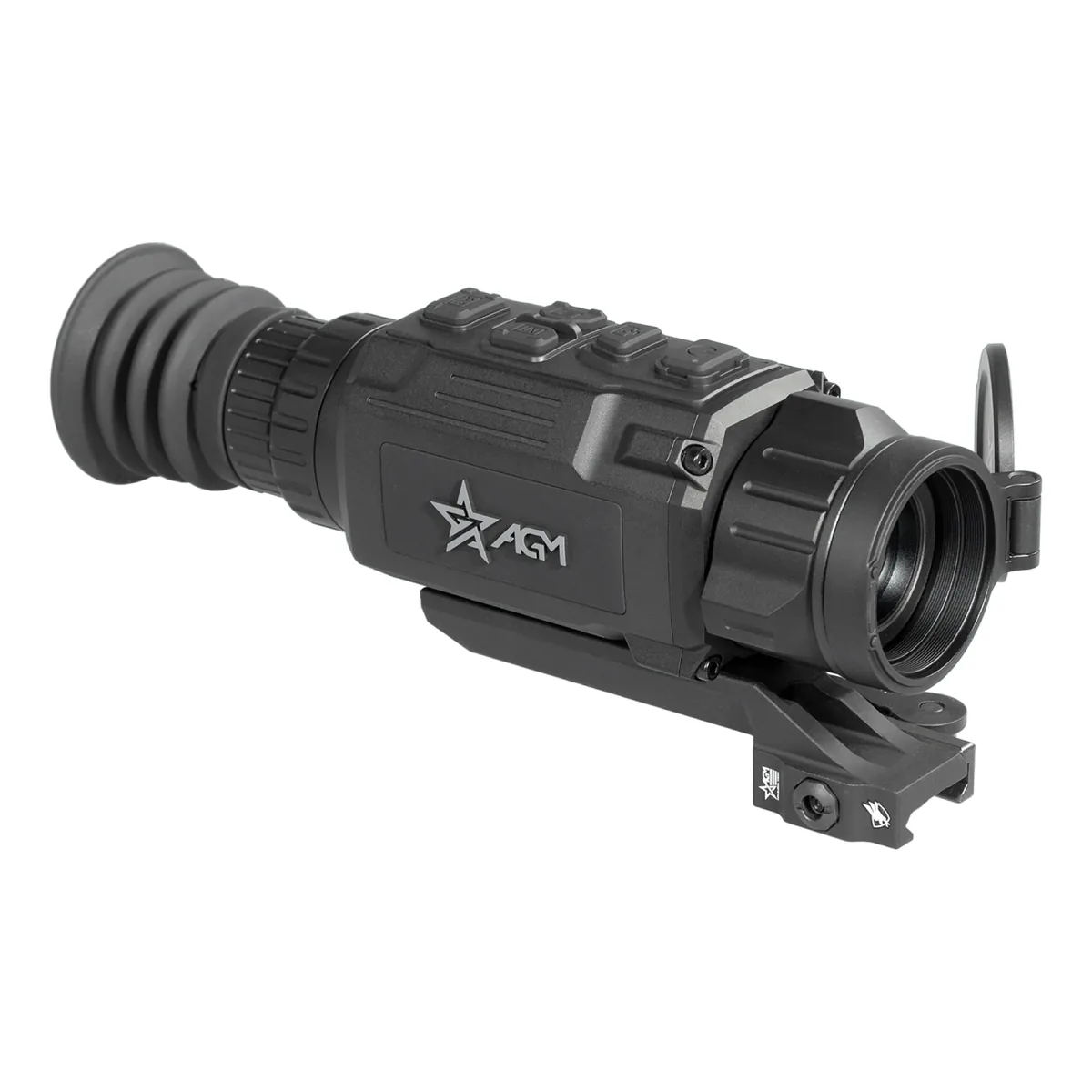
AGM Rattler V3 25-384
- Sensor
- 384×288
- Pitch · Hz
- 12 µm · 50
- Lens
- 25 mm
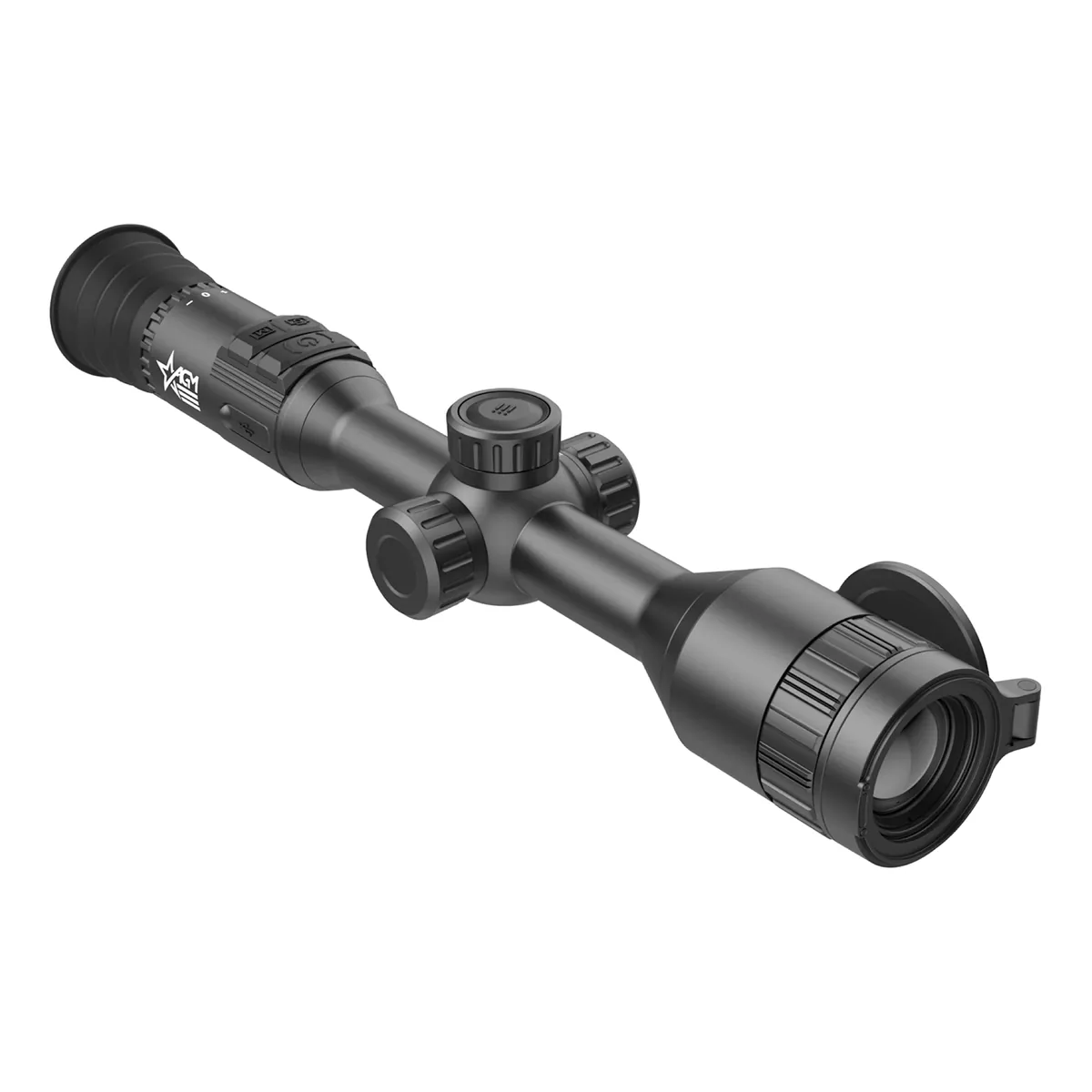
AGM Adder V2 35-384
- Sensor
- 384×288
- Pitch · Hz
- 12 µm · 50
- Lens
- 35 mm