iRayUSA quotes 1,260 m, 2.4× our figure, because makers usually measure against a person’s full height rather than their width. Why the numbers differ
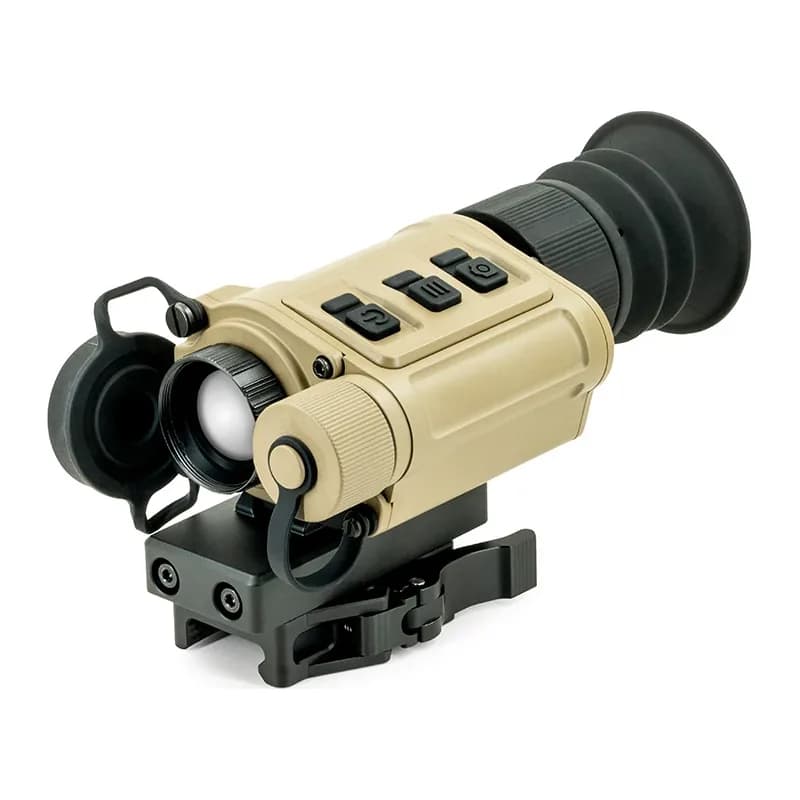
iRayUSA RICO Micro V2 RH25
- Approx. price
- ~$3,999
- Sensor
- 640×480 · 12 µm
- Lens
- 25 mm · 1×
- Weight
- 11.3 oz
Price and availability on iRayUSA’s site may differ.
A dedicated night rifle for hogs and coyotes inside about 150 yards
01Specifications
As published by iRayUSA. Sources: irayusa.com.
- Sensor
- 640×480
- Pixel pitch
- 12 µm
- NETD
- <15 mK
- Refresh rate
- 60 Hz
- Lens
- 25 mm
- Digital zoom
- up to 4×
- Field of view
- 17.5° horizontal
- Display
- 1440x1080 AMOLED
- Claimed detection
- 1,260 m
- Claim basis
- unspecified
- Run time
- 6.5 h
- Battery type
- 18650
- Weight
- 11.3 oz
- Length
- 4.5″
- Records video
- Yes
- Wi-Fi
- Yes
- IP rating
- IP67
- Warranty
- 5 years
- Country of origin
- China
- Approx. price
- ~$3,999
02Pros and cons
From the published specs. What owners report is in the next section.
- 640×480 sensor, 2.8× the detail of an entry-level 384
- Sensitive sensor that picks out small heat differences on humid or rainy nights (the best of 285 that publish it)
- Smooth 60 Hz picture on a running animal
- Takes 18650 batteries you can swap in the field
- Light at 11.3 oz, the lightest of the 194 riflescopes here
- Waterproof (IP67), survives a dunking
- Records video and connects to a phone app
- Short 25 mm lens: a wide view, but less reach than a 50 mm scope
- No rangefinder, so you judge distance by eye
- Zoom past 1× is digital and gets blurry
03What owners say
owner discussions, 2023–2026Summarised from 18 public owner discussions between 2023 and 2026. Owner experience, not a measurement; owners rarely distinguish the RICO Micro RH25 variants, so this covers the family.
The RH25 gets bought for one reason owners repeat in nearly every thread: it does four jobs. People run it on a helmet beside a PVS-14, hand-hold it to scan, clip it in front of an LPVO, and drop it on a .300 BLK as a standalone sight, and the same owners say it is good rather than great at each of them. One put it as 'there are probably better clip-ons for the money, but as a scanner this thing rocks.' The image itself draws little criticism: 'nice and crisp, can even locate mice' is typical, and people who have handled it next to the lighter Sidekick 640 call the RH25 the more solid unit, with a metal body and a cleaner picture.
The complaints are about software and setup, not glass. Owners describe the menu symbology as ambiguous, the automatic switch between helmet and clip-on mode as unreliable when the rifle moves, and the lack of a second stored collimation for helmet versus clip-on use as the thing they most want fixed. Clip-on users on LPVOs spend an evening chasing parallax until they learn to set the diopter with the scope at full zoom and paint-mark the ring, and the V2 dropped the small white alignment marks the V1 had. Running the display at brightness 4 or 5 is the standard tip for stretching the battery. These discussions span the 2023 V1 and the V2 that followed, and owners rarely say which they have, so treat the software gripes as family-wide.
Price has been a moving target: around $5,000 new through 2024, a tariff bump toward $5,900 in mid-2025, then a sudden drop to between $3,600 and $4,000 in January 2026 that had owners guessing a V3 was close. Used V2s have traded at $3,500 to $3,700.
- Four roles from one unit: helmet-mounted beside a PVS-14, handheld scanner, clip-on in front of an LPVO, or standalone sight. Owners who hunt coyotes like unclipping it and handing it to a buddy as a scanner.
- Crisp 640 image for its size; one owner finds mice in the yard with it, and people who have handled both call it noticeably more solid than the Sidekick 640, metal body versus plastic.
- Clip-on use in front of an LPVO is where owners are happiest, and fixed 1x and 4x prisms work too. One owner's 3-12x Nikon worked; an ACOG is described as usable but clearly worse than an LPVO.
- Bridges properly with a PVS-14: the V2 has on-screen X/Y offset adjustment so the thermal image can be collimated over the tube image, which one owner credits for avoiding the eyestrain others blame on bridged rigs.
- Deep mount ecosystem: Unity, pictail, MQD, ADM QD and a flip-to-side mount all come up, and the same mounts carry over to the RL25.
- iRayUSA's five-year warranty follows the unit rather than the first buyer, which owners point to when buying or selling used.
- Software is the weak point: owners call the menu symbology ambiguous, and the automatic switch into helmet mode when the rifle moves does not always switch back to clip-on mode when it is time to shoot.
- Only one collimation can be stored, so anyone who swaps between helmet and clip-on duty re-collimates each time; a V1 owner called this the main gripe and wanted a profile that flips automatically when the unit is turned over.
- Clip-on parallax takes real setup: the diopter position for hand scanning and for clip-on use differ a lot, mount height of a few hundredths of an inch matters, and the V2 removed the white alignment dots V1 owners used to find the sweet spot.
- Heavier and bulkier than the StingIR 640 and Sidekick 640, and one Sidekick owner who used a friend's RH25 noticed lag when panning.
- Price has swung by nearly $2,000 in two years, including a tariff-driven increase in mid-2025 and a sharp cut in January 2026. One owner also reported a V2 that would not hold its clip-on zero on a second-focal-plane 1-6x, with no resolution posted.
Can I run the RH25 in front of my existing scope?
Owners do, and an LPVO is the scope they recommend. Fixed prisms at 1x and 4x work, an ACOG is usable but not pleasant, and an EOTech is the one combination owners failed with because the holographic window is too small at that eye relief. One owner was warned off a 4-16x because its low end is too much magnification for the RH25's screen. Expect to spend an evening on parallax: set the scope to full zoom, turn the thermal's eyepiece until the pixels are sharp, then mark the ring so you can return to it.
Is it a good partner for a PVS-14 on a bridge?
It is one of the standard choices. The V2 can be collimated against the tube image, and one owner says the bridged pair weighs within an ounce of a set of GPNVGs with an E-COTI at a fraction of the price, with the bonus that the thermal can move to a rifle. Not everyone's brain fuses the two images; several owners navigate on the tube and swing the RH25 down only to scan, and one ran bridged for a year before giving up and buying binoculars.
How far can I identify a coyote with it?
Owners who shoot 5.56 call it a good match for the cartridge's reach and say positive identification of a coyote gets hard past 300 yards. One owner's blunt advice is that past 150 yards a conventional scope does the job better, and others add that you lose depth perception under thermal, so a rangefinder matters for anything past the zero distance.
The price just dropped. Should I wait for a V3?
That was the January 2026 question when new V2s fell from about $5,000 to between $3,600 and $4,000 at most dealers. Owners assumed a successor was coming but nothing had been announced in the threads, and the consensus was that the V2 at that price was a buy if the four-role design fits how you hunt. Earlier in 2025 the same unit went the other way, with a tariff increase pushing it toward $5,900.
04Compare the RH25
05Related units
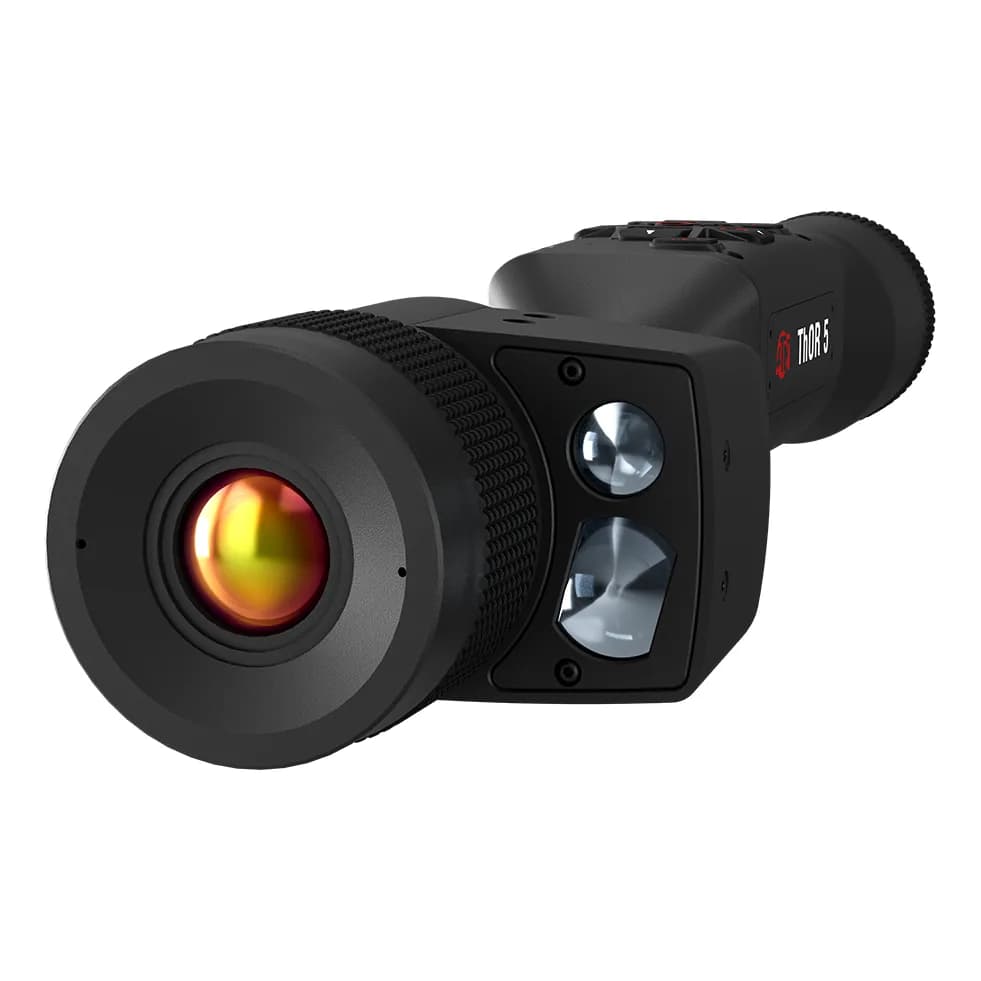
ATN ThOR 5 LRF 640 2-16x
- Sensor
- 640×480
- Pitch · Hz
- 12 µm · 60
- Lens
- 25 mm
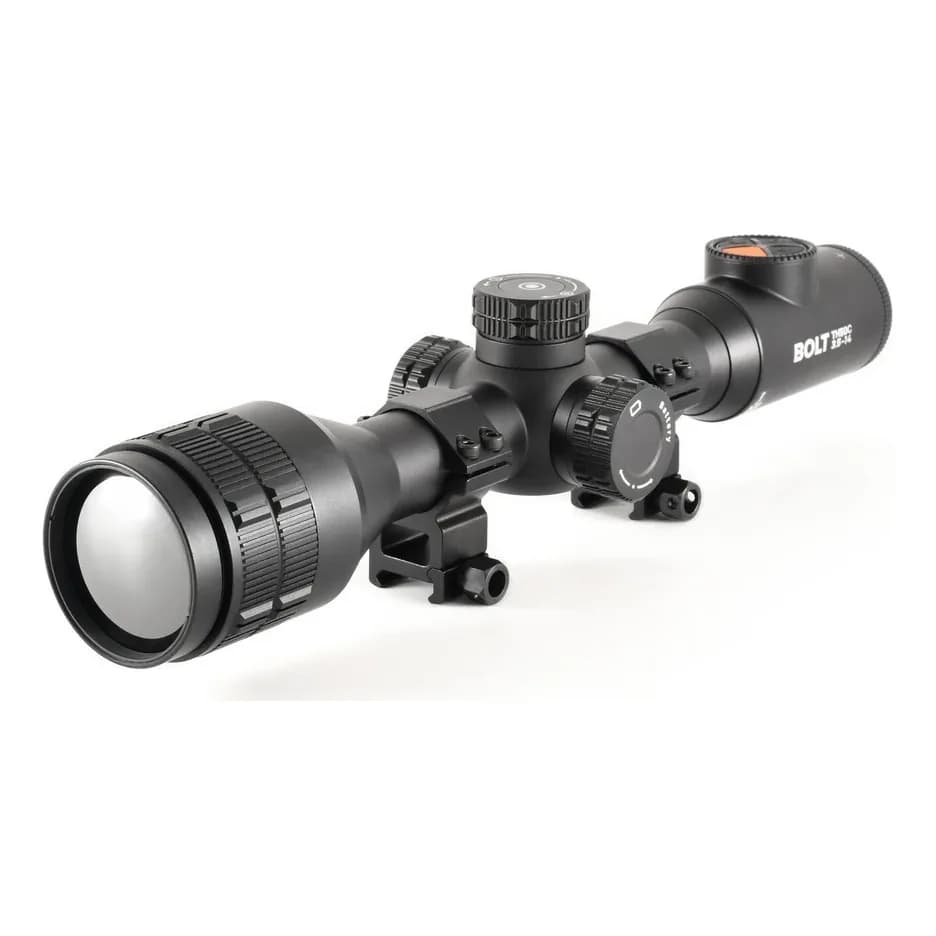
iRayUSA Bolt TH50C V2
- Sensor
- 640×512
- Pitch · Hz
- 12 µm · 50
- Lens
- 50 mm
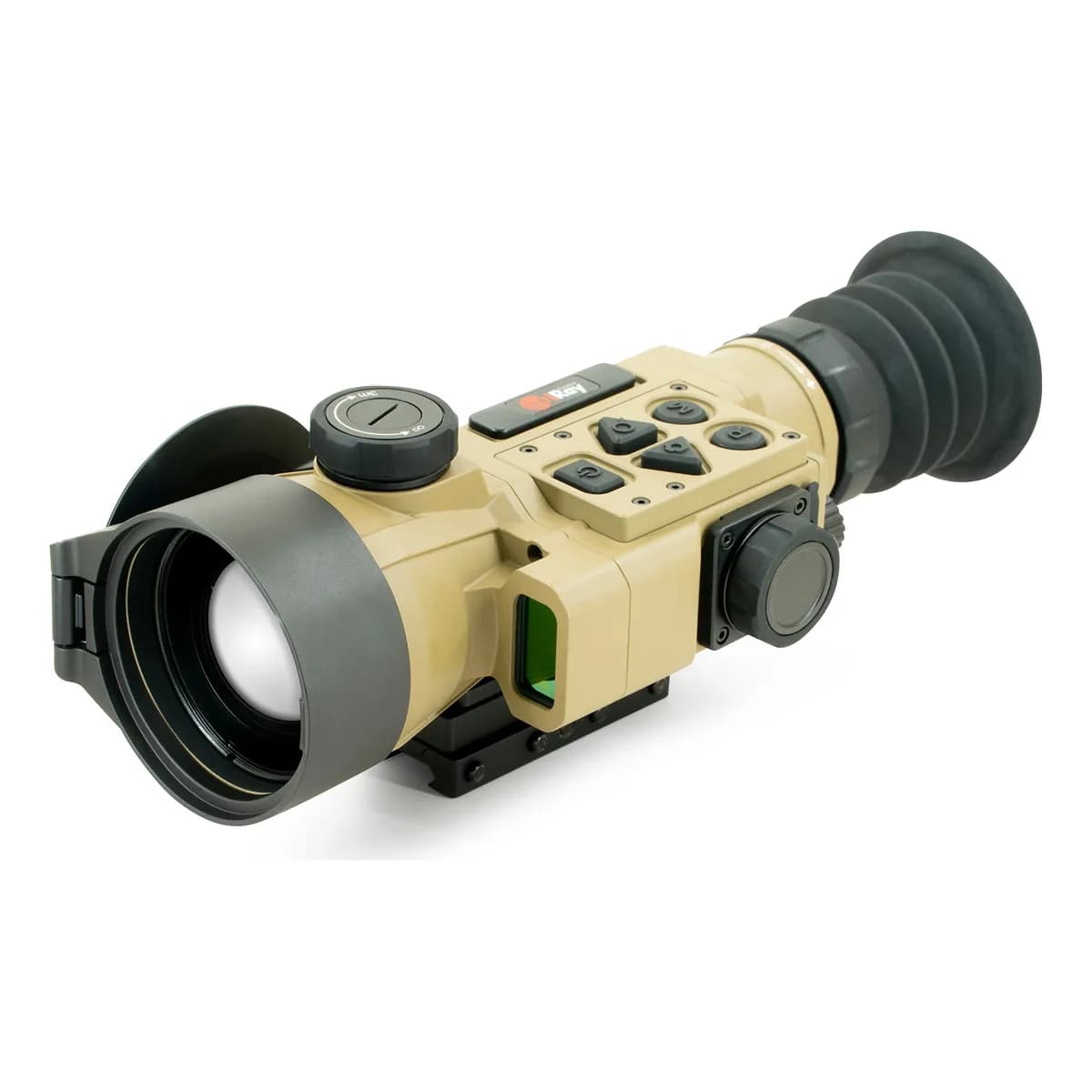
iRayUSA RICO Hybrid Compact HCH50R
- Sensor
- 640×480
- Pitch · Hz
- 10 µm · 60
- Lens
- 50 mm