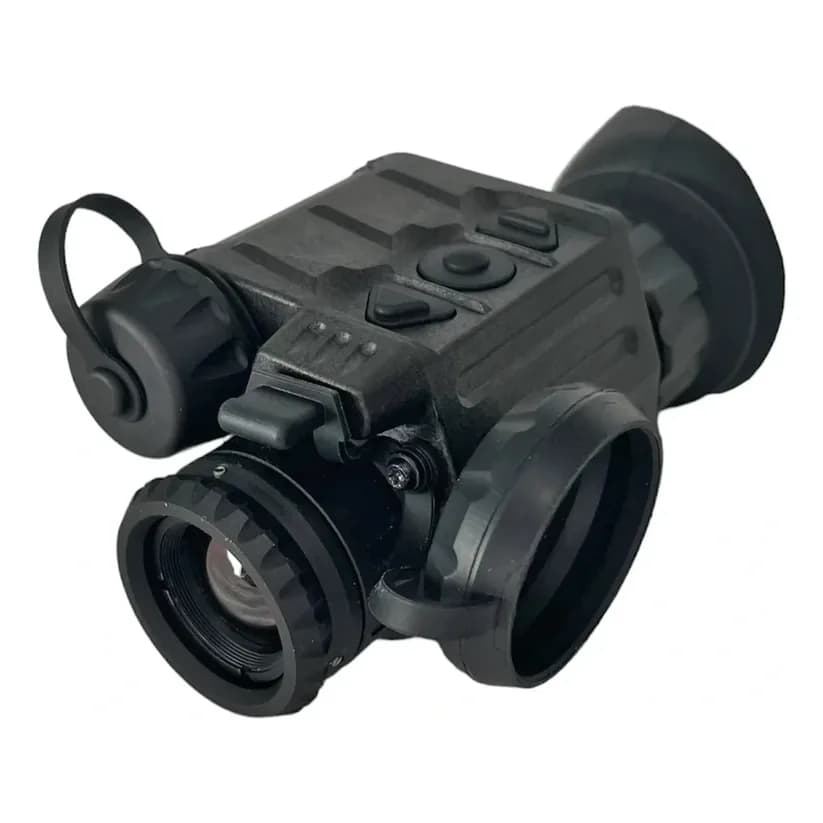
Armasight quotes 709 m, 1.8× our figure, because makers usually measure against a person’s full height rather than their width. Why the numbers differ
Armasight Sidekick 640
- Approx. price
- ~$3,299
- Sensor
- 640×480 · 12 µm
- Lens
- 19 mm · 1×
- Weight
- 9 oz
We may earn a commission. Price and availability on Amazon’s site may differ.
Walk-and-scan glassing from a jacket pocket
01Specifications
As published by Armasight. Sources: armasight.com.
- Sensor
- 640×480
- Pixel pitch
- 12 µm
- NETD
- <40 mK
- Refresh rate
- 60 Hz
- Lens
- 19 mm
- Digital zoom
- up to 4×
- Field of view
- 24.16° horizontal
- Display
- 1024x768 OLED
- Claimed detection
- 709 m
- Claim basis
- human-sized target
- Run time
- 1.5 h
- Battery type
- CR123
- Weight
- 9 oz
- Length
- 4.1″
- Records video
- Yes
- Wi-Fi
- No
- IP rating
- IP67
- Warranty
- 3 years
- Country of origin
- USA (assembled from U.S. and global components)
- Approx. price
- ~$3,299
02Pros and cons
From the published specs. What owners report is in the next section.
- 640×480 sensor, 2.8× the detail of an entry-level 384
- Smooth 60 Hz picture on a running animal
- Takes CR123 batteries you can swap in the field
- Light at 9 oz, 14th-lightest of the 112 handhelds here
- Waterproof (IP67), survives a dunking
- Wide 23° view for scanning a field
- Only 1.5 h of battery
- No rangefinder, so you judge distance by eye
- ~$3,299, well above the ~$1,995 typical for handhelds here
- Zoom past 1× is digital and gets blurry
03What owners say
owner discussions, 2023–2026Summarised from 16 public owner discussions between 2023 and 2026. Owner experience, not a measurement.
The Sidekick 640 is the budget dual-band thermal: almost every owner in these discussions runs it on a bridge beside a PVS-14 rather than handheld, and the price is the reason. New units went for $2,500 to $3,000 in 2024 and 2025 with sales under $2,550, and used ones change hands around $2,000 to $2,700. Owners like that it is small and light and that the image is good for the money once the firmware is updated. One owner who has a friend's RH25 to compare prefers the Sidekick for weight and says the iRay lags more when panning.
The dissent is loud, though. One person who tested a unit for an evening had the software freeze several times until the battery was pulled, called the picture poor for a 640, and listed what it does not do: no app, footage only comes off over a USB cable, no clip-on mode, and a plastic body whose protective covers pop out if grazed. People who have used it beside a Skeet-IR say the sensor is clearly a tier down, and 'not worth it at full retail' comes up more than once. Battery life on CR123s is the universal practical complaint; most owners end up with an external pack on the back of the helmet.
- Small and light enough to bridge comfortably beside a PVS-14; owners who have carried an RH25 on the same bridge say the weight difference is what they notice first.
- Image is good for the price once the firmware is updated, and one owner who moved up from a FLIR Breach calls it a clear step. Sepia mode overlaid on a filtered green tube is a combination two owners describe as easy on the eyes.
- Wider field of view than the Jerry YM 2.0 and a larger apparent screen than the Rix Stride, which is why buyers choosing between it, the RH25 and the StingIR 640 for helmet duty lean this way.
- Costs roughly half of an RH25 new and holds a usable resale price; a registered three-year extended warranty can be transferred with the seller's help.
- Latency and frequent NUC pauses are the recurring complaint, from owners and from people who passed on it after watching footage; the usual verdict is that it is fine for detecting and aiming but not something to navigate by.
- One evening-long tester had the unit freeze repeatedly, each time needing the battery pulled to reboot.
- No app and no wireless transfer: video comes off over USB, and there is no clip-on mode, so it stays a helmet or handheld unit.
- Battery life on CR123s disappoints owners who hunt all night; the common fix is an aftermarket power bank on the helmet as counterweight instead of the maker's $300-plus pack.
- Plastic housing with press-fit protective covers that fall out when grazed, and a screen one owner finds a little bright even turned down.
- People who have used it beside a Skeet-IR say the sensor and processing are a clear tier below; one blunt reply was that Armasight 'does not make good thermals, they make thermals,' and another owner's advice was simply not to buy it.
Sidekick 640 or RH25 for a PVS-14 bridge?
Owners split exactly where you would expect. The Sidekick is about half the price and much lighter, and one owner who has used both prefers it for that reason, noting the RH25 lagged when panning. The RH25 has the metal body, the crisper image, clip-on mode, an app, and helmet, handheld and standalone modes; someone who tried the Sidekick for an evening and sent it back called it not a complete product. If you only want a helmet thermal and the budget is tight, the Sidekick is the usual answer; if you also want it on a rifle, it is not an option.
Is the lag as bad as people say?
Owners say it is noticeable, not crippling. One describes it as freezing a little but 'enough to aim,' and another says it got much better after a firmware update. The strongest complaints about constant NUC interruptions tend to come from people relaying what they have read rather than from owners.
How do owners keep it running all night?
Not on the internal CR123s. Owners pair it with an Anker-type power bank or an 18650 pack mounted on the back of the helmet, which doubles as counterweight and costs far less than the branded battery pack. An owner who hunts coyotes and hogs for up to seven hours a night asked for exactly this a week after buying.
Does the dual-band fusion thing actually work?
Only with practice, and not for everyone. Owners say the eye follows whichever image is brighter, so they turn the thermal up and treat the tube as background, and that the two must be collimated or the mismatch causes headaches. Several simply navigate on the PVS-14 and look through the Sidekick only to scan, and one owner who had both says his brain never overlaid them well but there was no learning curve to switching attention between them.
04Compare the 640
05Related units
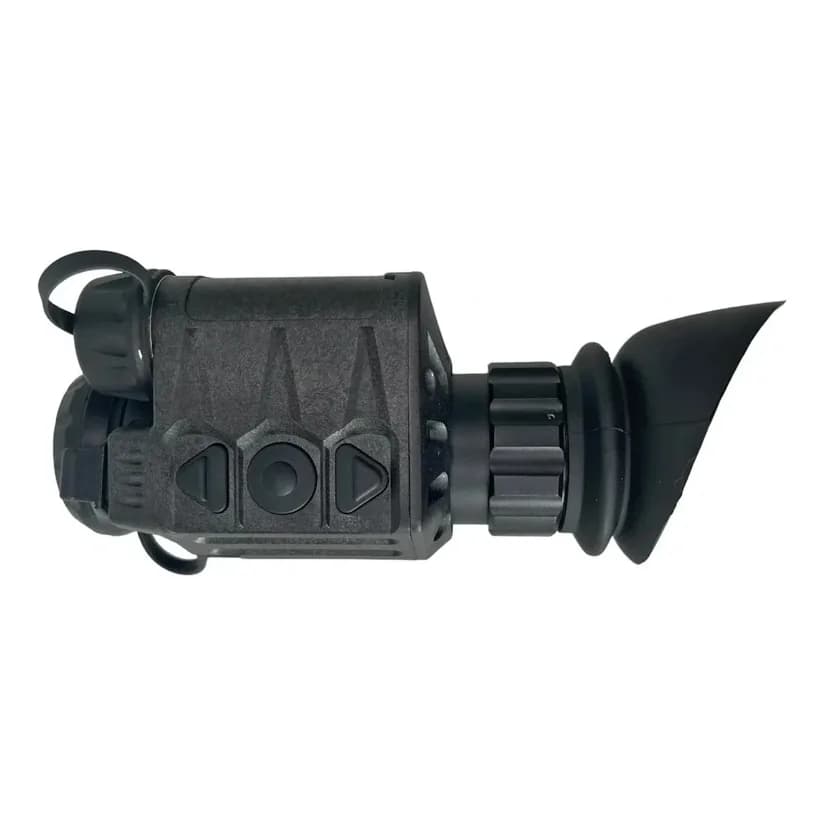
Armasight Sidekick Pro 640 1-4x19
- Sensor
- 640×480
- Pitch · Hz
- 12 µm · 60
- Lens
- 19 mm
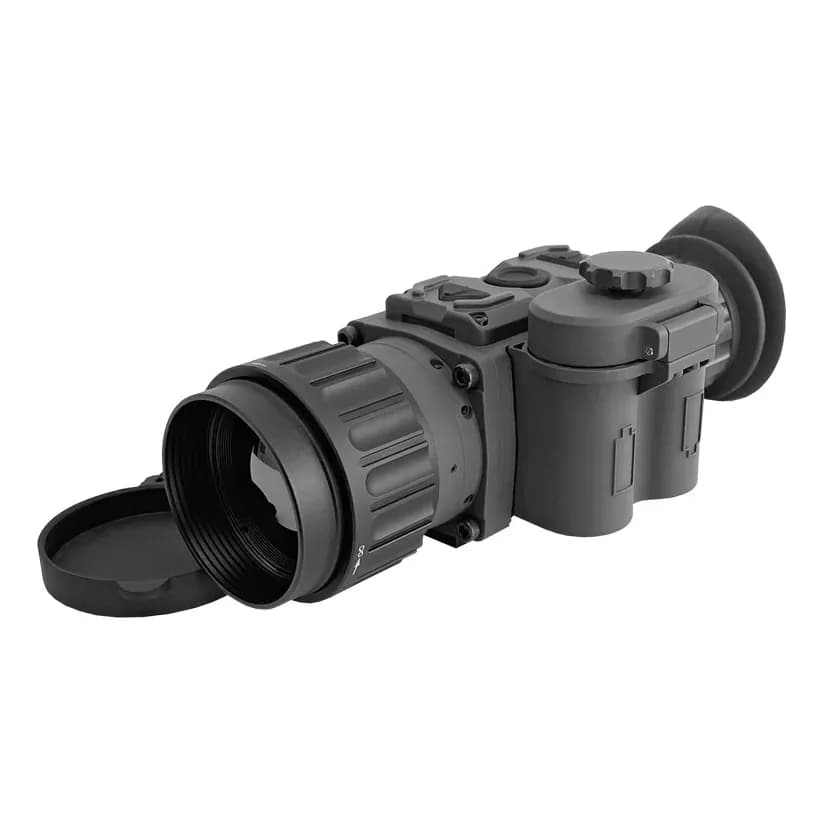
Armasight Warden 640 2-8x35
- Sensor
- 640×480
- Pitch · Hz
- 12 µm · 60
- Lens
- 35 mm
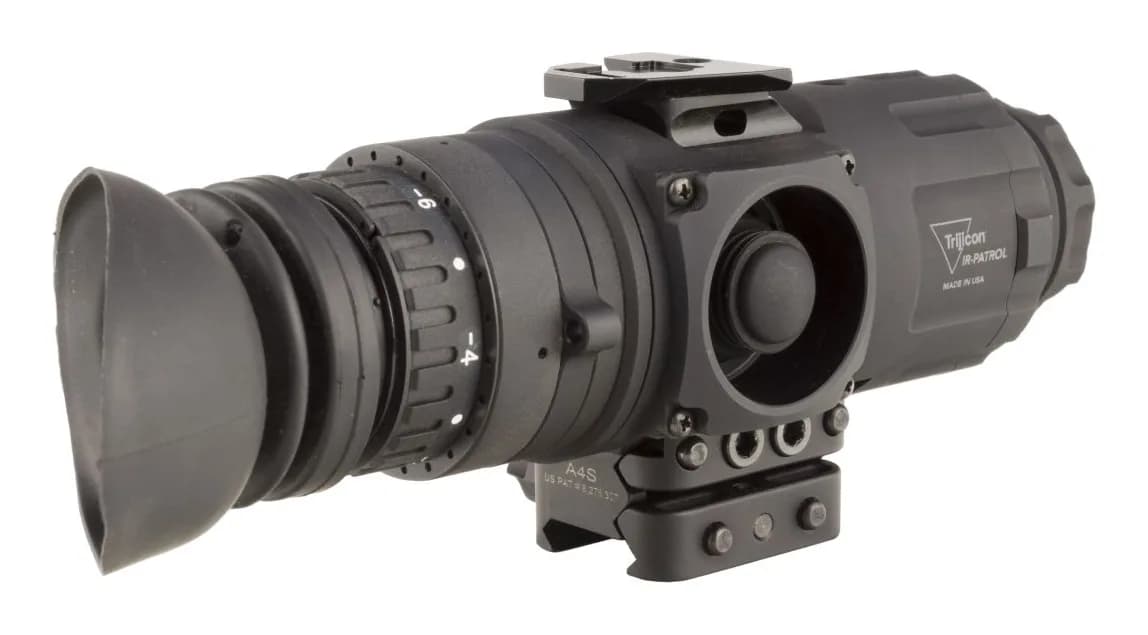
Trijicon IR-PATROL IRMO-250
- Sensor
- 640×480
- Pitch · Hz
- 12 µm · 60
- Lens
- 19 mm