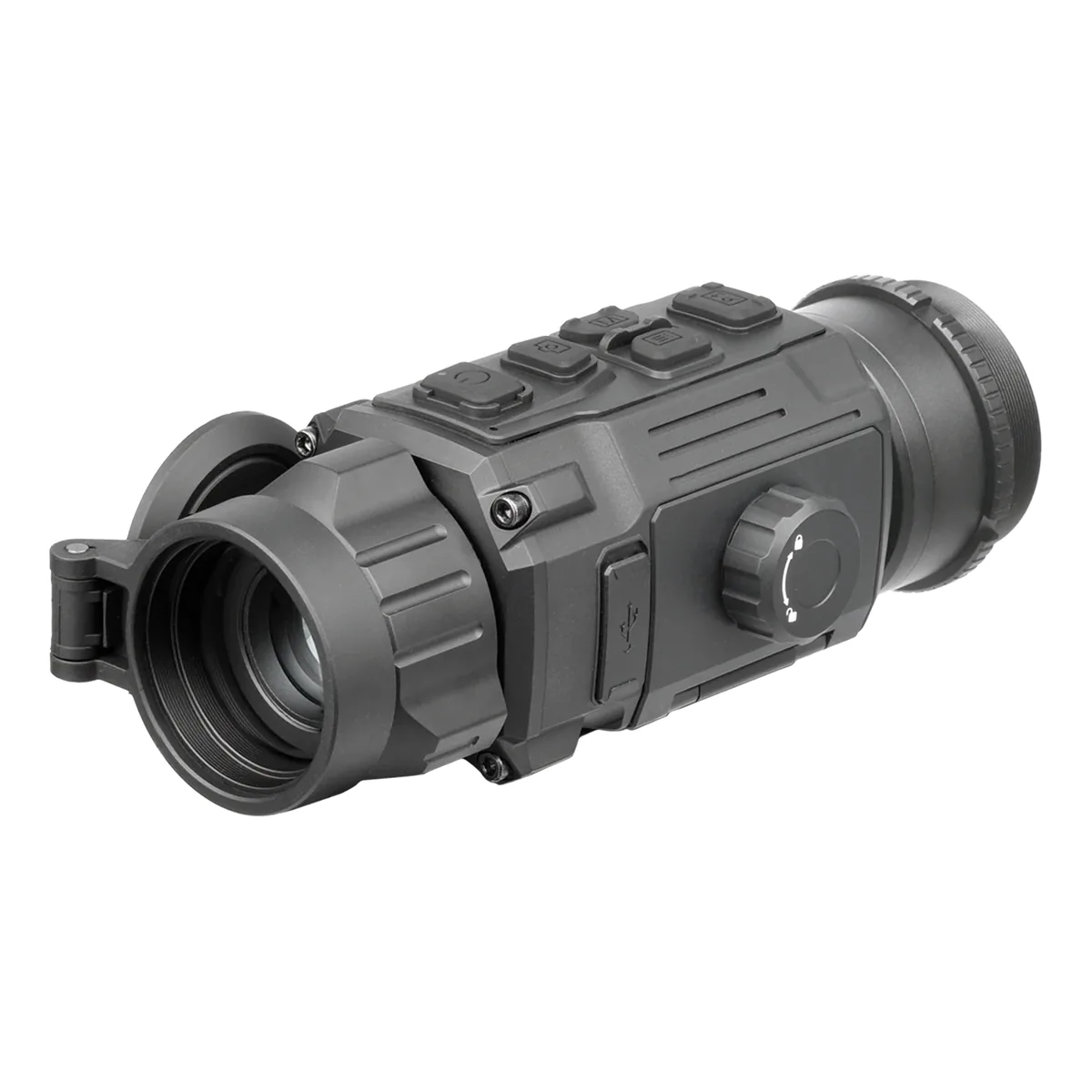
AGM Global Vision quotes 1,000 m, 2.5× our figure, because makers usually measure against a person’s full height rather than their width. Why the numbers differ
AGM Rattler-C V2 19-256
- Approx. price
- ~$995
- Sensor
- 256×192 · 12 µm
- Lens
- 19 mm · 1×
- Weight
- 17.6 oz
We may earn a commission. Price and availability on Amazon’s site may differ.
Keeping your day scope and its zero while adding thermal at night
01Specifications
As published by AGM Global Vision. Sources: agmglobalvision.com (product page, 2026 catalog), downloads.agmglobalvision.com (datasheet).
- Sensor
- 256×192
- Pixel pitch
- 12 µm
- NETD
- <35 mK
- Refresh rate
- 50 Hz
- Lens
- 19 mm
- Digital zoom
- up to 8×
- Field of view
- 9.3° horizontal
- Display
- 1024x768 OLED
- Claimed detection
- 1,000 m
- Claim basis
- 6 ft (1.8 m) object
- Run time
- 11.5 h
- Battery type
- Removable pack
- Weight
- 17.6 oz
- Length
- 7.2″
- Records video
- Yes
- Wi-Fi
- Yes
- IP rating
- IP67
- Warranty
- 5 years
- Approx. price
- ~$995
02Pros and cons
From the published specs. What owners report is in the next section.
- Swappable battery pack, so a spare doubles the run time
- 11.5 h of battery, 18th-longest of 344 here
- Waterproof (IP67), survives a dunking
- Records video and connects to a phone app
- Warranty: 5 years
- ~$995, well under the ~$3,499 typical for clip-ons here
- 17.6 oz hanging off the front of your day scope
- No rangefinder, so you judge distance by eye
- Entry-level 256×192 sensor, with less detail than a 640
- Zoom past 1× is digital and gets blurry
03What owners say
owner discussions, 2024–2026Summarised from 10 public owner discussions between 2024 and 2026. Owner experience, not a measurement.
The Rattler-C V2 19-256 is the clip-on most first-time buyers in these discussions land on when the budget is about $900. Owners who bought one mostly run it in front of a 1-6x LPVO on an AR or a subsonic .300 Blackout and describe it plainly as a 100-yard tool: one owner puts identification of hog- or coyote-sized animals at about 150 yards, and another says people look fine but small animals are rough past that. Several owners end up carrying it as a handheld scanner more than they mount it, and the wide field of view at 1x is part of why.
The pushback comes from people who have used higher resolutions. Clip-ons work by magnifying a small screen through your day scope, so a 256 sensor runs out of detail quickly; owners and experienced users alike say not to go past about 3x behind it, and a common recommendation is to buy a dedicated 384 scope instead if the clip-on feature is not essential. Zeroing confuses buyers because the clip-on alignment procedure is not in the manual.
- Owners who wanted one thermal for detection and occasional shooting like that it doubles as a wide 1x handheld; one owner uses it mostly for scanning and shoots under night vision.
- Your day scope keeps its zero: owners align the thermal's image digitally to the day reticle, and it stores several profiles so it can move between rifles without redoing the alignment each time.
- Comes with an ADM-style Picatinny mount that owners say returns close to where it was, and a gap between it and the LPVO does not hurt the picture.
- For close work in brush, owners are happy: one picked out a bobcat and her kitten through heavy cover on his first outing, and another calls it good value as long as you stay inside 100 yards.
- The 256 sensor is the limit everyone hits. Owners describe cows turning into blobs past a few hundred yards, and people running clip-ons say anything above about 3x on the day scope pixelates badly.
- The clip-on zeroing procedure is missing from the manual; one owner called AGM twice before being told a separate PDF exists that they email on request.
- One owner could not make it work sharing a rail with his LPVO and ended up treating it as a standalone, and several owners advise a dedicated scope over a clip-on at this price.
- Buyers comparing it at the same money keep being pointed elsewhere: the DNT Hydra 384 models around $1,100 to $1,200, a 25 mm 256 Rattler with more base magnification, or saving for a 384.
How do you zero the Rattler-C without touching the scope zero?
You don't re-zero the day scope. Owners mount the clip-on in front of it, fire a shot, and move the thermal's digital reference line until the image lines up with where the day reticle hits. AGM has a PDF covering this that is not in the box; owners got it by calling support.
Clip-on Rattler-C or the regular Rattler V2 19-256?
Owners split by use. Those who want one rifle to do day and night duty, or who mostly handhold it, prefer the clip-on. Those buying a dedicated night gun mostly say the regular scope gives more for the money at this resolution, and that a quick-detach mount on the day scope solves the swapping problem anyway.
What day optic works best behind it?
A 1-6x LPVO or a red dot with a magnifier. One owner with a fixed 3.5x clip-on found he zoomed too far into the screen to see the menus, and the general advice is to stay at about 3x or below with a 256 sensor.
04Compare the 19-256
05Related units
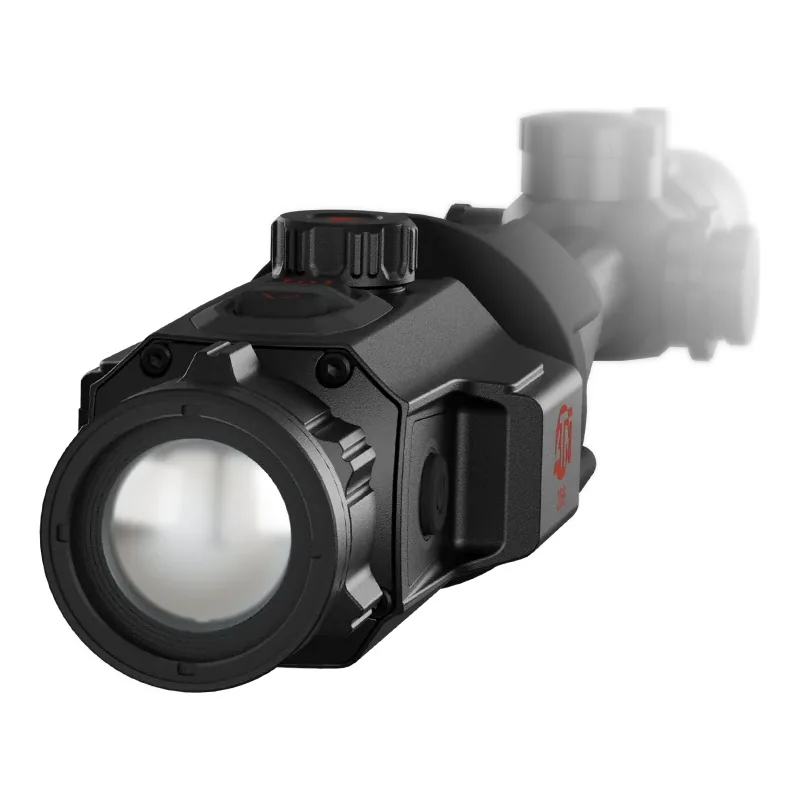
ATN TICO 6 256x192
- Sensor
- 256×192
- Pitch · Hz
- 12 µm · 50
- Lens
- 25 mm
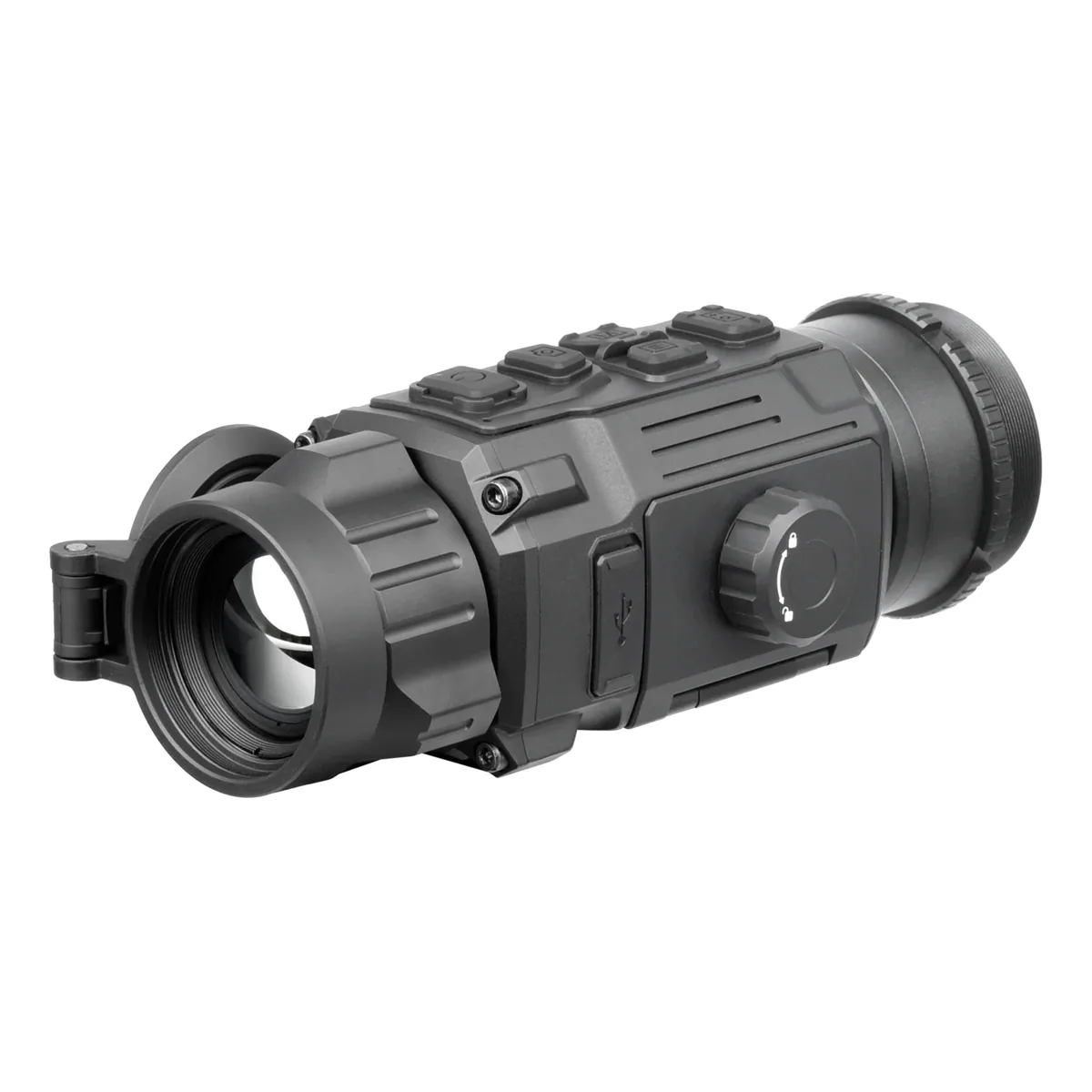
AGM Rattler-C V2 35-384
- Sensor
- 384×288
- Pitch · Hz
- 12 µm · 50
- Lens
- 35 mm
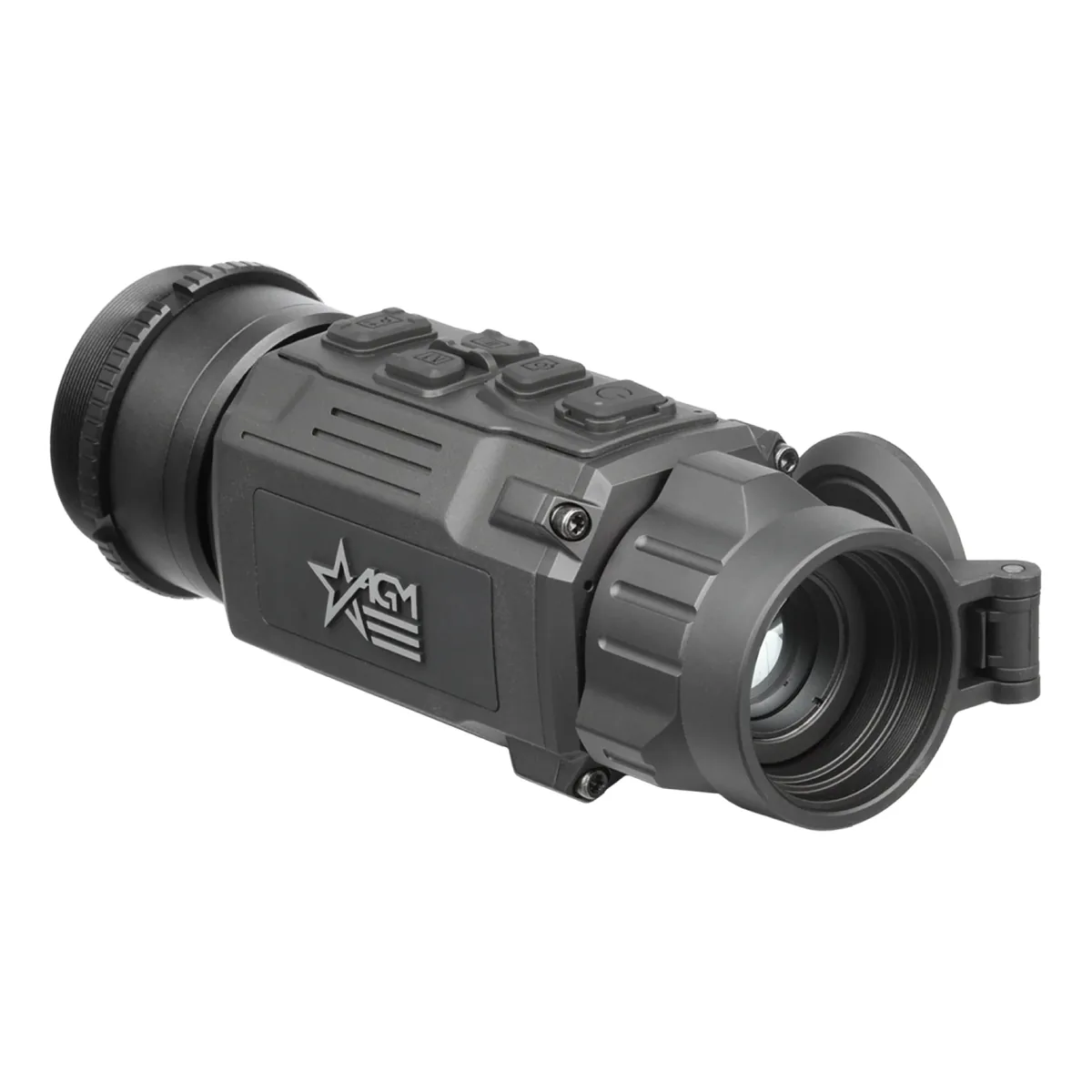
AGM Rattler V2 19-256
- Sensor
- 256×192
- Pitch · Hz
- 12 µm · 50
- Lens
- 19 mm