N-Vision quotes 1,850 m, 1.8× our figure, because makers usually measure against a person’s full height rather than their width. Why the numbers differ
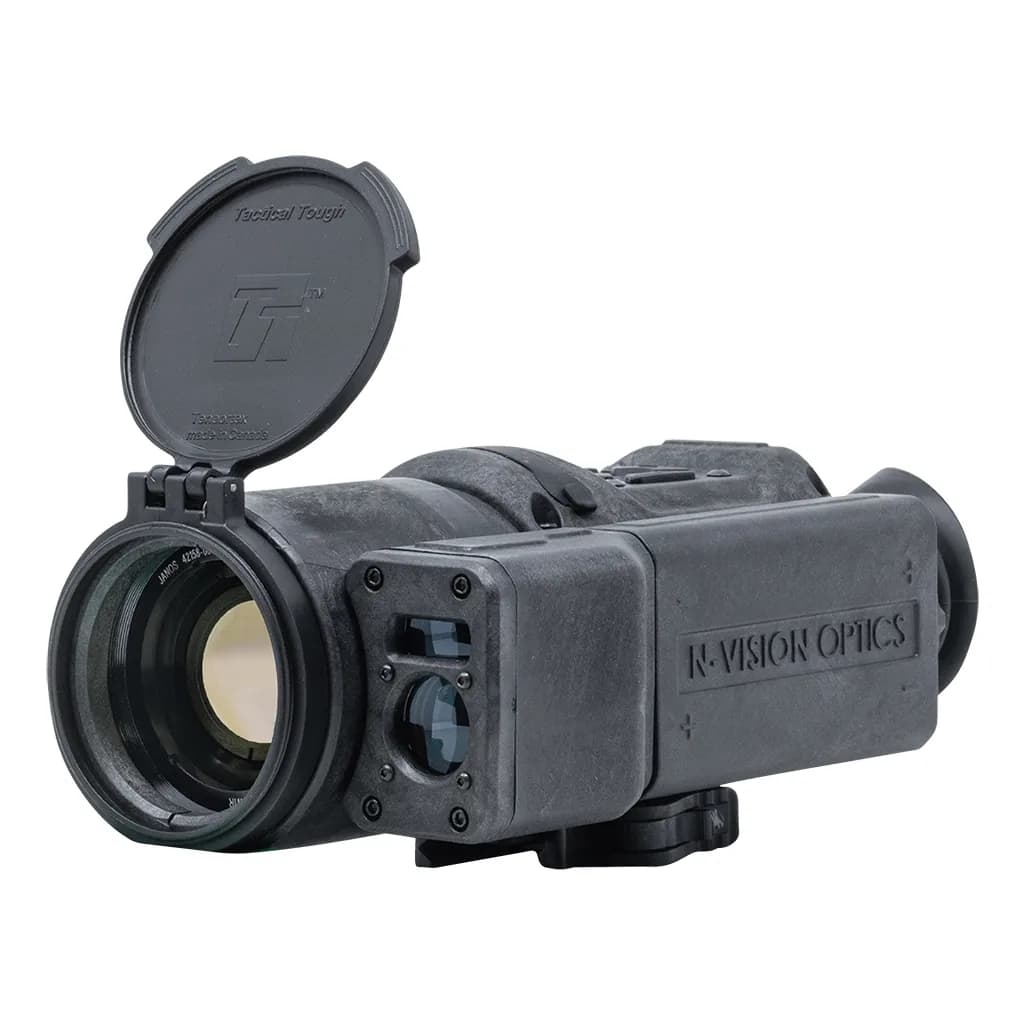
N-Vision HALO-XRF
- Approx. price
- ~$9,495
- Sensor
- 640×480 · 12 µm
- Lens
- 50 mm · 3.5×
- Weight
- 41.5 oz
Price and availability on N-Vision’s site may differ.
Night shooting where ranging matters — hogs and coyotes past 150 yards
01Specifications
As published by N-Vision. Sources: nvisionoptics.com, ultimatenightvision.com (LRF to 1,000 yd; 2x 18650), nvisionoptics.com warranty page.
- Sensor
- 640×480
- Pixel pitch
- 12 µm
- Refresh rate
- 60 Hz
- Lens
- 50 mm
- Digital zoom
- up to 8×
- Field of view
- 9° horizontal
- Display
- 640x480 OLED
- Claimed detection
- 1,850 m
- Claim basis
- unspecified
- Run time
- 7 h
- Battery type
- 18650
- Weight
- 41.5 oz
- Length
- 8.9″
- Records video
- Yes
- Wi-Fi
- Yes
- Warranty
- 5 years
- Country of origin
- USA
- Approx. price
- ~$9,495
02Pros and cons
From the published specs. What owners report is in the next section.
- 640×480 sensor, 2.8× the detail of an entry-level 384
- Smooth 60 Hz picture on a running animal
- Built-in laser rangefinder
- Takes 18650 batteries you can swap in the field
- Records video and connects to a phone app
- Warranty: 5 years
- Sensitivity (NETD) not published
- Heavy at 41.5 oz, 24th-heaviest of the 194 riflescopes here
- No waterproof rating published
- Rangefinder but no ballistic calculator, so holdover is up to you
- ~$9,495, well above the ~$3,000 typical for riflescopes here
03What owners say
owner discussions, 2023–2025Summarised from 12 public owner discussions between 2023 and 2025. Owner experience, not a measurement.
In early 2023 owners talked about the HALO-XRF as the scope at the top of the heap: onboard video with audio, a built-in rangefinder, and the opinion that only a 1280 core at $10,000 to $12,000 could knock it off. Owners who came from Pulsar back that up. One traded an XP50 in on it and calls it awesome; another says the Thermion 2 is not anywhere near it and points to the Thermion's documented cold-weather zero shift. The hunter posting the most footage runs it on a suppressed 300 Blackout with 110-grain V-Max, with coyotes dropped at about 300 yards and strings of head shots on hogs that never worked out where the sound was coming from.
The price is the problem, and the second-hand market shows it. It was over $9,000 at list and about $7,200 on discount in 2023, and street price in January 2025 was still around $7,100, by which point an owner evaluating a trade named two or three scopes in that bracket he believes outperform it: the Nocpix S60R, the InfiRay Bolt TX60C and the Thermion 2 LRF XL50. Used asking prices slid from $7,300 in May 2024 to $6,200 by October with the five-year warranty still good to 2028. And not every owner is convinced the premium bought much: one looked through a buddy's Pulsar Trail afterward and felt let down at what he had spent, and another who shot both the Trail 2 and the XRF did not notice much difference.
- The feature set is complete in one housing: onboard video and audio recording plus the laser rangefinder, which in 2023 had owners saying nothing short of a 1280 core at $10,000-plus would unseat it.
- Pulsar converts are happy: one traded a Trail XP50 in on it and calls it awesome, and another says the Thermion 2 is nowhere near it and cites the Thermion's documented cold-weather zero shift as a reason he prefers the XRF.
- It kills at distance on a small cartridge: the owner posting the most footage takes coyotes at about 300 yards and strings of hog head shots with a suppressed 300 Blackout and 110-grain V-Max.
- Five-year warranty: units bought in January 2023 still carry coverage to January 2028, which every second-hand listing leads with.
- Price against current peers: still about $7,100 street in 2025, and an owner weighing a trade named three scopes in that bracket he believes outperform it, the Nocpix S60R, the Bolt TX60C and the Thermion 2 LRF XL50.
- Some owners feel the premium did not show up in the glass: one looked through a buddy's Pulsar Trail and felt let down at what he had spent, and another who shot both the Trail 2 and the XRF did not notice much difference between them.
- It depreciates like everything else in thermal: second-hand asking prices went from $7,300 in May 2024 to $6,200 in October with warranty remaining, and sellers were still revising downward within their own listings.
Is the HALO-XRF worth it over a Pulsar Trail 2 LRF XP50 at half the price?
Owners who have shot both are not unanimous. One says the Trail 2 was very nice and he did not notice much difference; an XRF owner who later looked through a friend's Trail felt let down at how much more he had spent, though he values the onboard recording. Owners who prefer the XRF point to its features, audio-and-video recording and a rangefinder in one unit, more than to a visibly better picture.
What is a fair used price?
Second-hand listings in 2024 ran from $7,300 down to $6,200 as the year went on, with warranty to January 2028 and sometimes a Billet Precision mount offered for another $150. An owner evaluating a trade in January 2025 put new street price at about $7,125 and called a lightly used 2023 unit plus $1,000 in exchange for a $5,500 day scope a fair deal.
Can I run it on a SCAR 17?
Owners advised against it. Even owners of military-grade clip-ons say their makers would not certify SCAR use, and nobody wanted to take what one called a $10,000 risk on the SCAR's recoil impulse; the owner who asked ended up buying a Sig 716 for his .308 night rig instead. Pulsar owners on SCARs report no problems, but none had tried the Halo's mount.
04Compare the HALO-XRF
05Related units
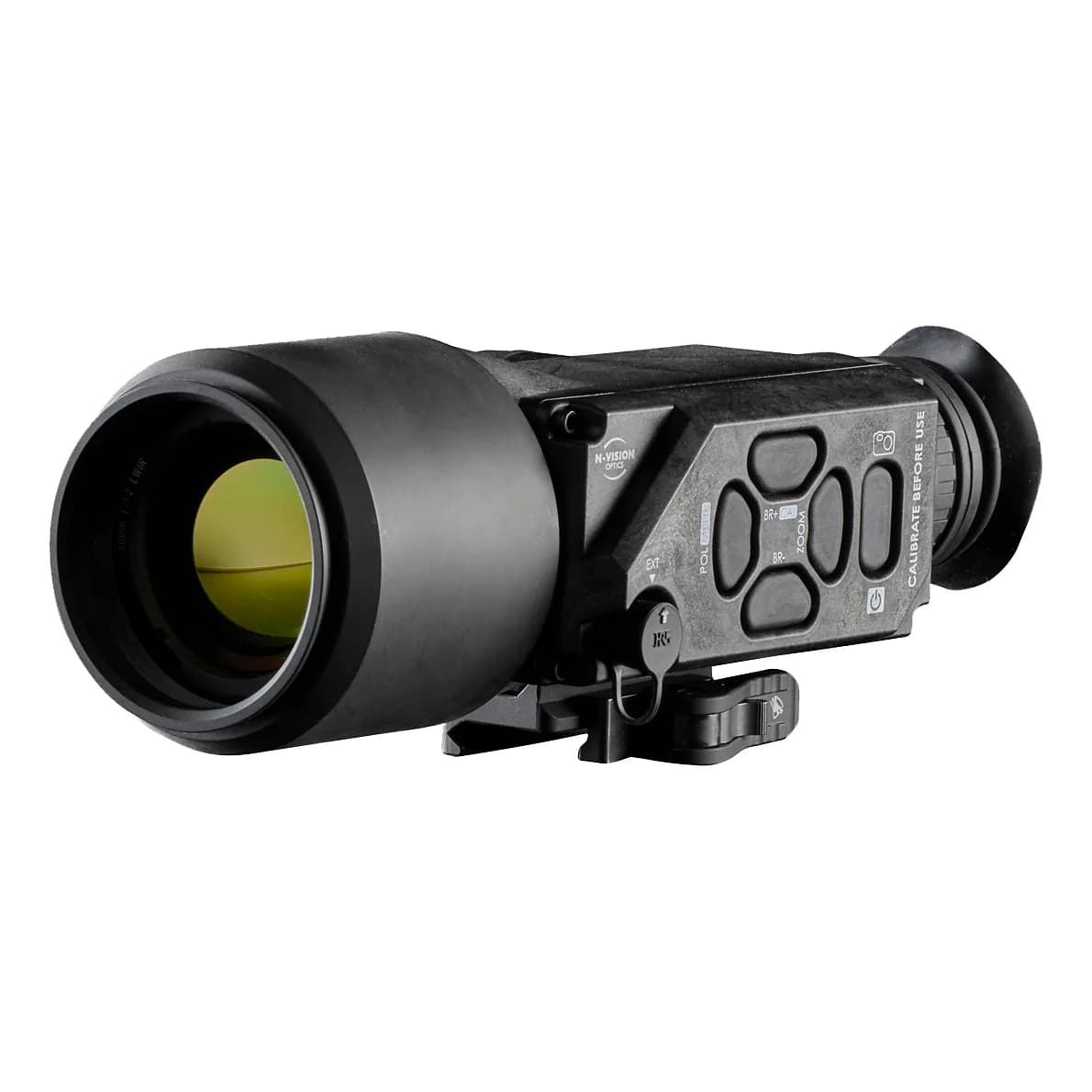
N-Vision HALO-LR
- Sensor
- 640×480
- Pitch · Hz
- 12 µm · 60
- Lens
- 50 mm
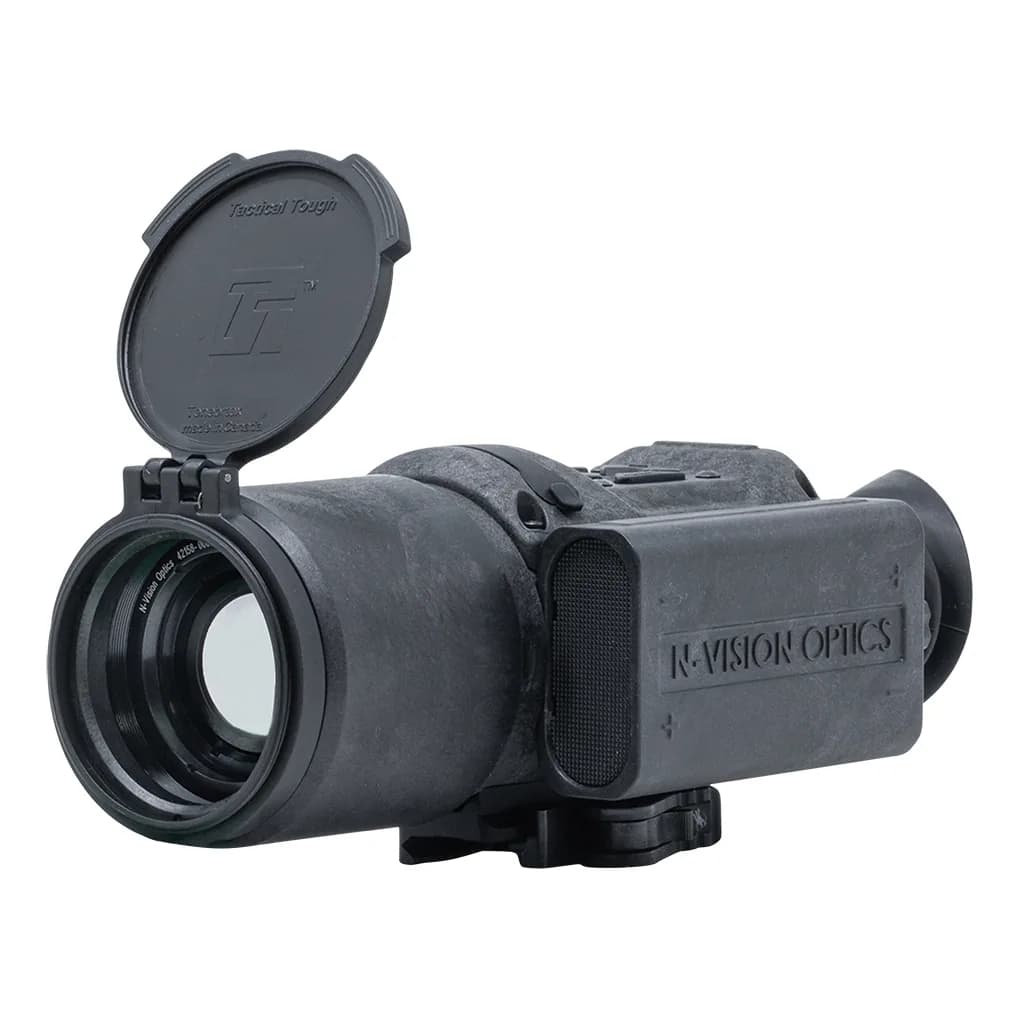
N-Vision HALO-X50
- Sensor
- 640×480
- Pitch · Hz
- 12 µm · 60
- Lens
- 50 mm
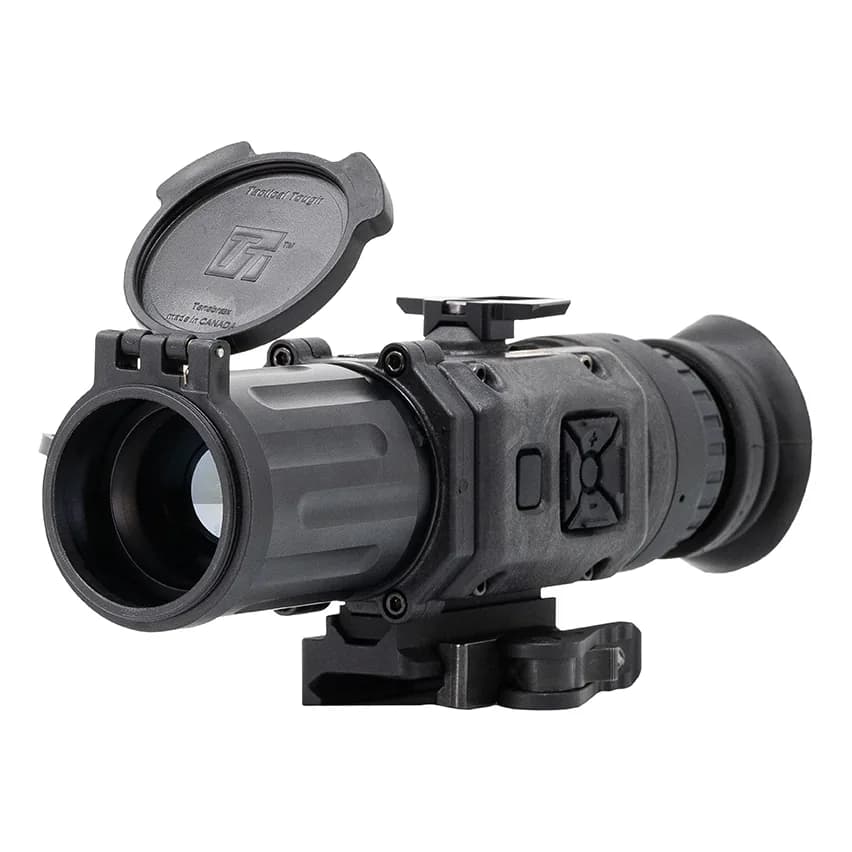
N-Vision NOX35
- Sensor
- 640×480
- Pitch · Hz
- 12 µm · 60
- Lens
- 35 mm