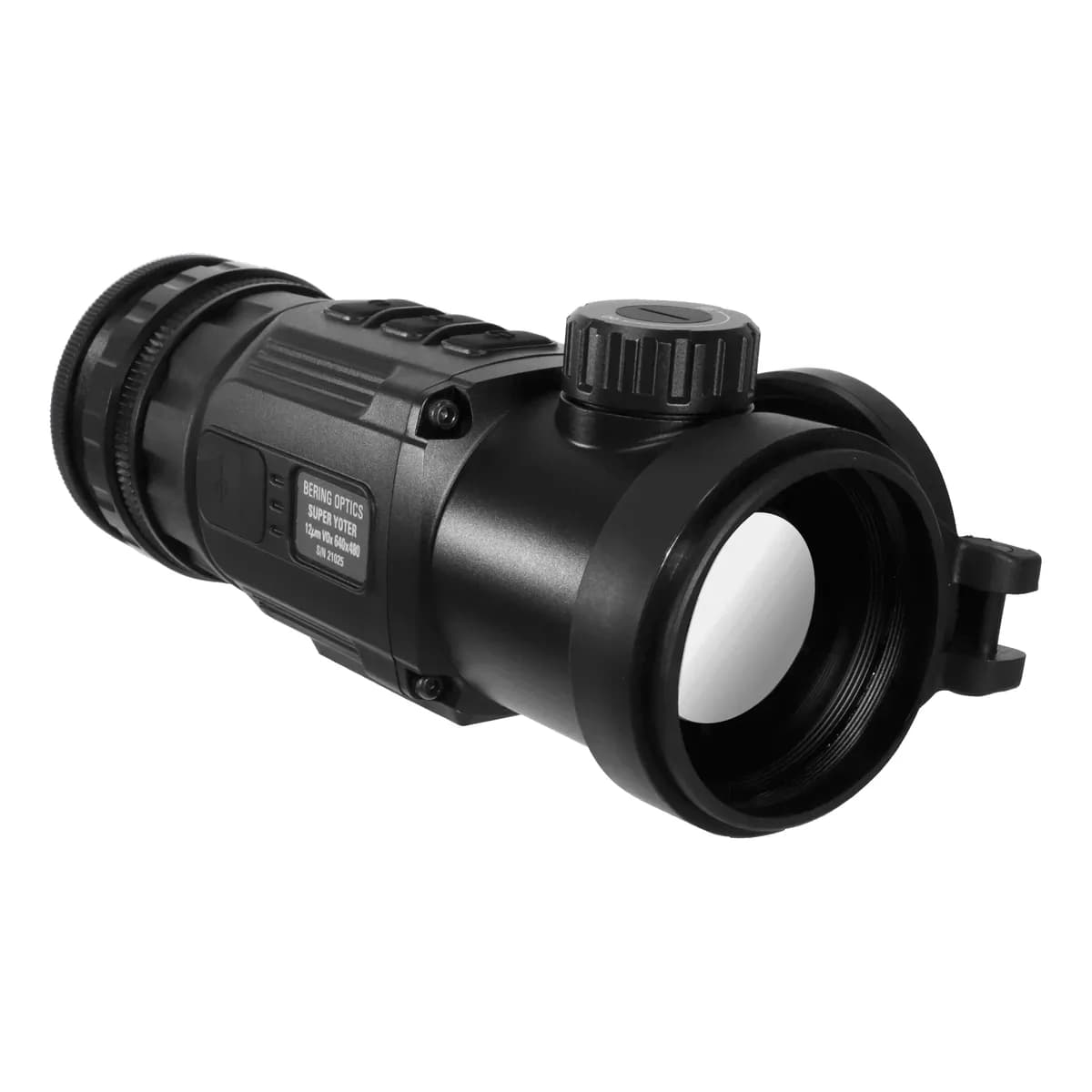
Bering Optics quotes 2,290 m, 2.2× our figure, because makers usually measure against a person’s full height rather than their width. Why the numbers differ
Bering Optics Super Yoter C
- Approx. price
- ~$3,895
- Sensor
- 640×480 · 12 µm
- Lens
- 50 mm · 1×
- Weight
- 18.4 oz
Price and availability on Bering Optics’s site may differ.
Keeping your day scope and its zero while adding thermal at night
01Specifications
As published by Bering Optics. Sources: usa.beringoptics.com (specs), basicprecision.com (V2.0 price, in stock, 7-yr warranty).
- Sensor
- 640×480
- Pixel pitch
- 12 µm
- NETD
- ≤50 mK
- Refresh rate
- 50 Hz
- Lens
- 50 mm
- Digital zoom
- up to 4×
- Field of view
- 8.8° horizontal
- Display
- 1024x768 OLED
- Claimed detection
- 2,290 m
- Claim basis
- human-sized target (2500 yd)
- Run time
- 4 h
- Battery type
- CR123
- Weight
- 18.4 oz
- Length
- 7.1″
- Records video
- Yes
- Wi-Fi
- Yes
- IP rating
- IP66
- Warranty
- 7 years
- Approx. price
- ~$3,895
02Pros and cons
From the published specs. What owners report is in the next section.
- 640×480 sensor, 2.8× the detail of an entry-level 384
- Takes CR123 batteries you can swap in the field
- Weather-sealed (IP66), fine in rain
- Records video and connects to a phone app
- Only 4 h of battery
- 18.4 oz hanging off the front of your day scope
- No rangefinder, so you judge distance by eye
- Zoom past 1× is digital and gets blurry
03What owners say
owner discussions, 2022–2026Summarised from 10 public owner discussions between 2022 and 2026. Owner experience, not a measurement; owners rarely distinguish the Super Yoter C variants, so this covers the family.
Owners split cleanly on the Super Yoter C: they like the optic and they do not like the company. As a dedicated clip-on the image gets real respect. The reply that drew the most agreement in a Yoter-versus-RH25 discussion calls it the superior clip-on, an experienced owner says it punches well above its weight class and would not take the Hogster over it, and people who have run both say it stays usable to roughly 14x behind a day scope where the RH25 falls apart past about 6x. One owner who runs his on a 20-inch AR behind a 4-16x Vortex with an external 10,000 mAh pack calls it a laser beam.
Then the support stories start. One owner asked which adapter fit his scope, got 'not precise enough' back after a month and a half, and five months later received a $300 invoice for a custom adapter he had not ordered, followed by phone calls chasing payment; his unit is a model number Bering does not document. Another has a BE46155 variant whose menu, Wi-Fi and Bluetooth match none of the instructions. A third did not enjoy trying to zero it and does not recommend it despite calling the image pretty good. The line that sums it up came from an owner: he likes the optic and loathes Bering Optics.
Owners mention a V1, a V2 and the BE46155 variant without usually saying which they have, and almost all of these posts predate the V2, so this is written for the line.
- As a pure clip-on the image is the strong point: owners who have run both rank it above the RH25 in front of a day scope, say it stays usable to about 14x where the RH25 pixelates past 6x, and one experienced owner says it punches well above its weight class.
- It holds zero and shoots: an owner running it on a 20-inch AR behind a 4-16x calls it a laser beam with no recoil, and a coyote hunter takes dogs at 150 yards with his.
- It ages better than the spec sheet suggests: a 2026 through-the-scope comparison of a V1 against the much newer Nocpix Mate Ultra drew surprise from viewers, the poster's point being that a 1280 core is not everything in a clip-on.
- Bering Optics' support is the single most repeated complaint: a month and a half for a 'not precise enough' reply on an adapter question, then a $300 invoice for a custom adapter the owner never ordered, plus a BE46155 variant and another undocumented model number that the company will not answer questions about.
- Heavy, bulky and clip-on only: the owner shooting coyotes at 150 yards weighed selling his for an RH25v2 because it cannot do handheld or helmet duty, and buyers are told to budget for a separate scanner.
- Zeroing frustrated at least one owner enough to say he does not recommend it at all, and another has the battery cap fall off every time he fires his AR with no help from support.
- The picture is slipping against cheaper cores: a 2025 owner says his buddy's 384 Rix is much cleaner than his 640 Super Yoter and does not expect Bering to keep up with the competition.
- Version confusion: a V1, a V2 and the BE46155 variant are all in circulation, the menus and the Wi-Fi and Bluetooth features differ between them, the instructions on Bering's site match only one, and owners rarely say which they have.
Super Yoter C or RH25?
Owners who have used both give the same answer: the Super Yoter C is the better clip-on and the RH25 is the more versatile device, and cheaper. Behind a 2-10x the Yoter stays usable to roughly 14x combined while the RH25 goes pixelated past about 6x, but the RH25 doubles as a handheld or helmet scanner and the Yoter cannot. Several owners end up with both, one for finding and one for shooting.
What day-scope magnification works with it?
Owners run 4x to 8x most of the time and say up to about 14x is still usable. The clip-on adds no magnification of its own unless you engage its 3x digital zoom, which on a 4x scope would put you at 12x. Nobody reports any clip-on looking good at true 1x, on an Elcan or an LPVO.
How does it do in high humidity?
One owner with a lot of clip-on time says that inside 100 yards any clip-on will manage, that humidity hurts every thermal and better NETD helps, and that the Super Yoter C would be a fine choice for Gulf Coast conditions; he would not recommend the Hogster over it.
What is Bering Optics' support like?
Poor, by every account here. Response times of weeks to months, an unrequested $300 custom-adapter invoice, a battery-cap problem that got no answer, and two owners with model numbers the company will not document or support. Buy it for the optic, not for after-sales help.
04Compare the C
05Related units
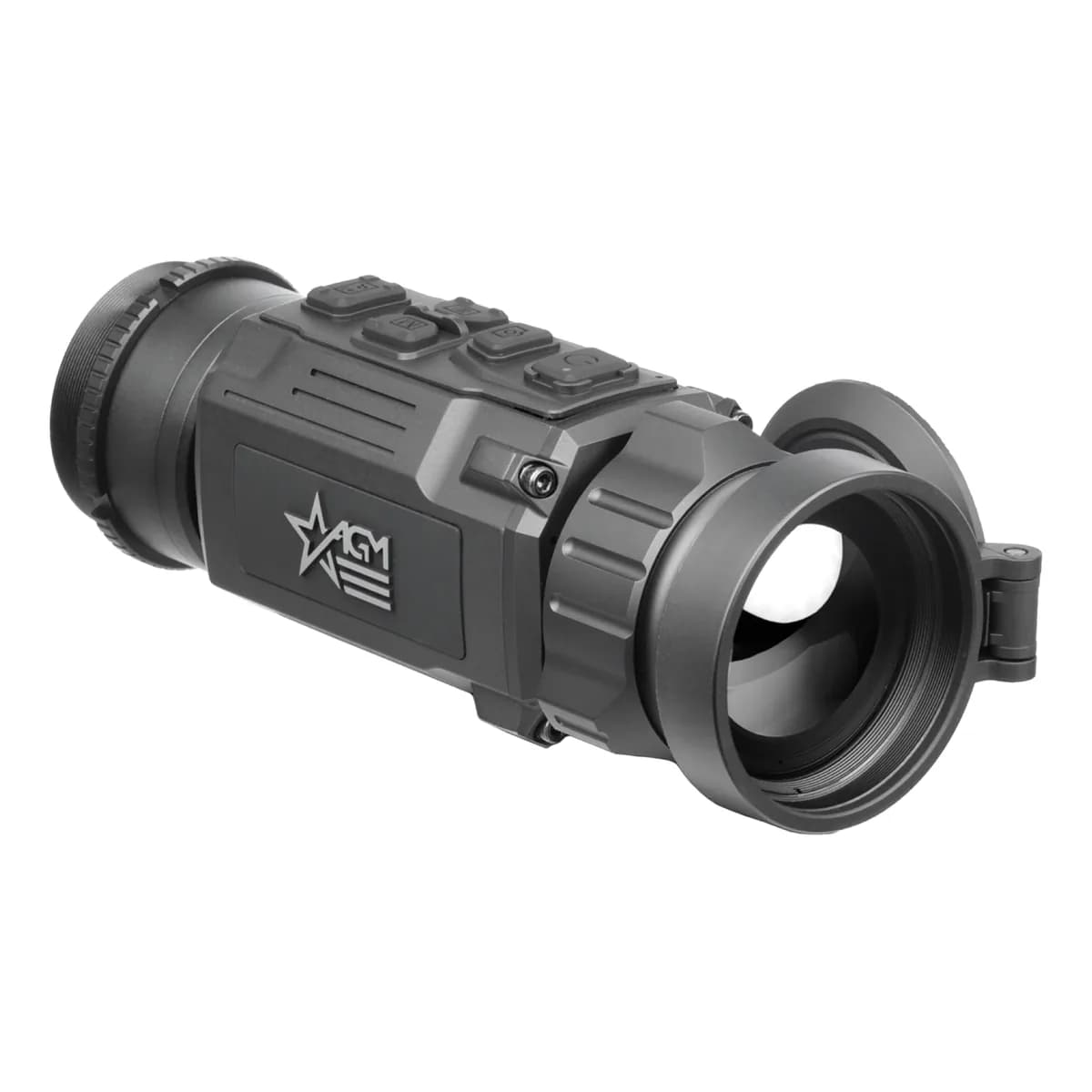
AGM Rattler-C V2 50-640
- Sensor
- 640×512
- Pitch · Hz
- 12 µm · 50
- Lens
- 50 mm
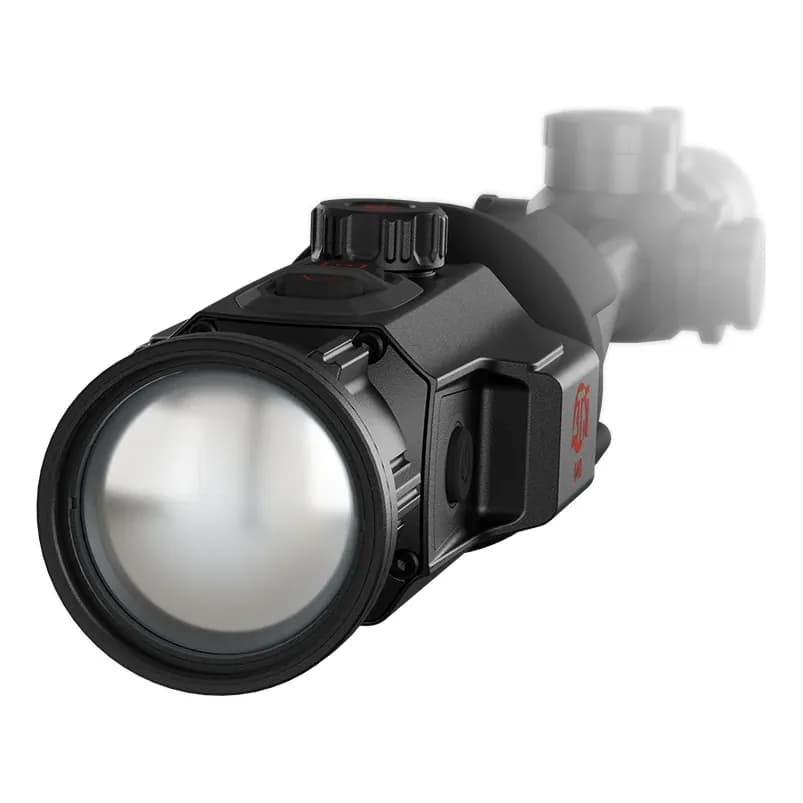
ATN TICO 6 640x512
- Sensor
- 640×512
- Pitch · Hz
- 12 µm · 50
- Lens
- 50 mm
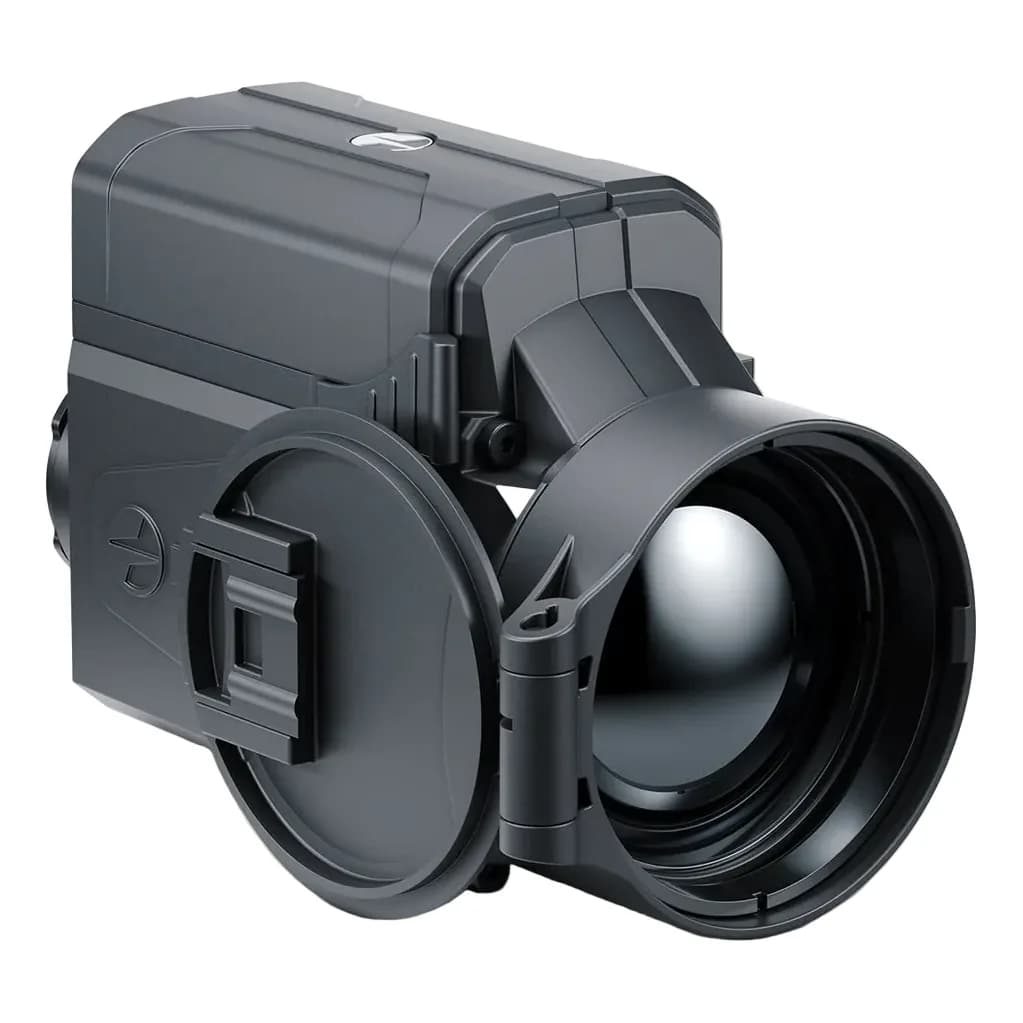
Pulsar Krypton 2 FXG50
- Sensor
- 640×480
- Pitch · Hz
- 12 µm · 50
- Lens
- 50 mm