AGM Global Vision quotes 1,800 m, 2.5× our figure, because makers usually measure against a person’s full height rather than their width. Why the numbers differ
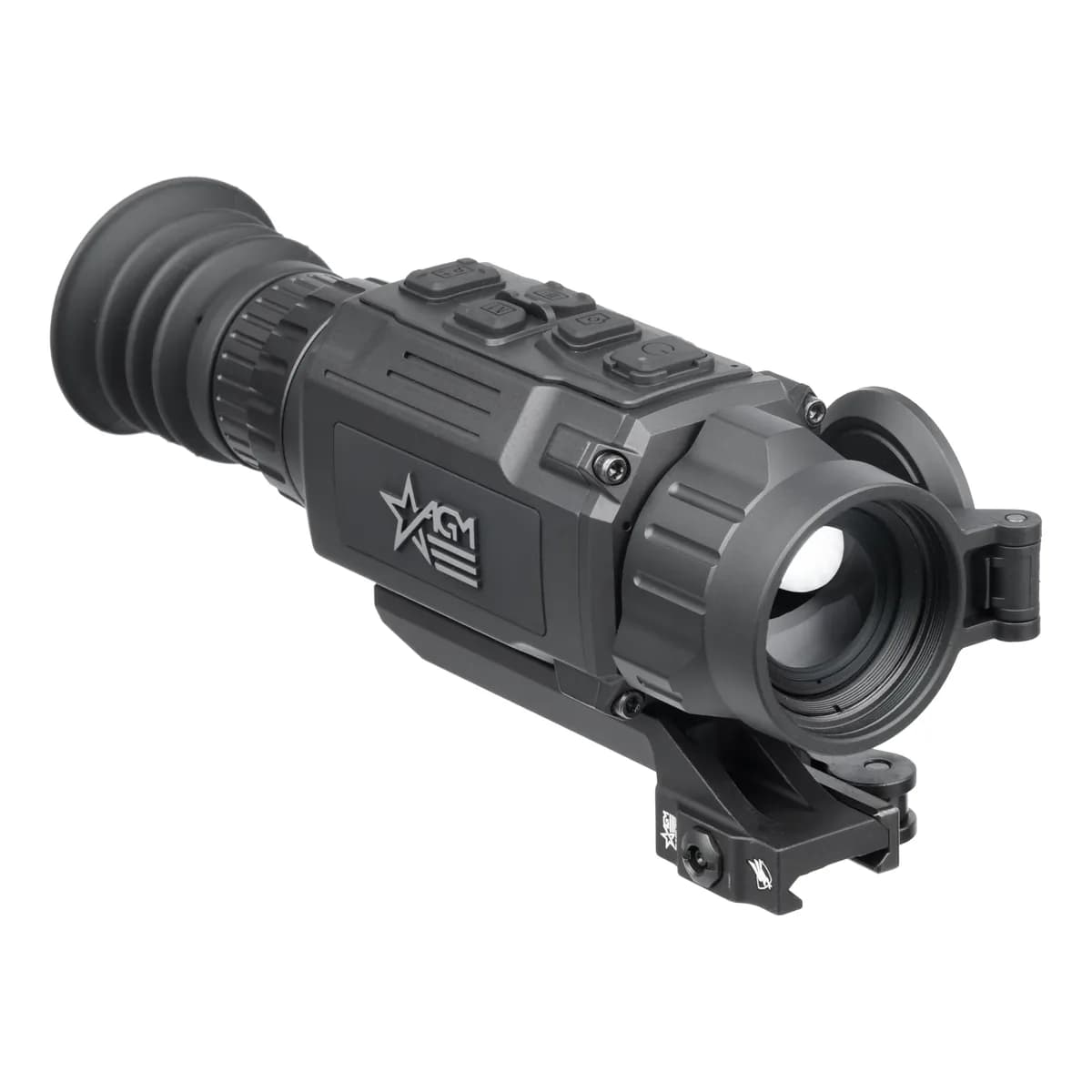
AGM Rattler V2 35-640
- Approx. price
- ~$2,545
- Sensor
- 640×512 · 12 µm
- Lens
- 35 mm · 2×
- Weight
- 18 oz
We may earn a commission. Price and availability on Amazon’s site may differ.
A dedicated night rifle for hogs and coyotes inside about 150 yards
01Specifications
As published by AGM Global Vision. Sources: agmglobalvision.com (product page + RattlerV2 640 datasheet), outdoorlegacygear.com.
- Sensor
- 640×512
- Pixel pitch
- 12 µm
- NETD
- <20 mK
- Refresh rate
- 50 Hz
- Lens
- 35 mm
- Digital zoom
- up to 8×
- Field of view
- 12.5° horizontal
- Display
- 1024x768 OLED
- Claimed detection
- 1,800 m
- Claim basis
- 6 ft (1.8 m) object
- Run time
- 9 h
- Battery type
- Removable pack
- Weight
- 18 oz
- Length
- 8.6″
- Records video
- Yes
- Wi-Fi
- Yes
- IP rating
- IP67
- Warranty
- 5 years
- Approx. price
- ~$2,545
02Pros and cons
From the published specs. What owners report is in the next section.
- 640×512 sensor, 3× the detail of an entry-level 384
- Sensitive sensor that picks out small heat differences on humid or rainy nights (104th-best of 285 that publish it)
- Swappable battery pack, so a spare doubles the run time
- 9 h of battery, 81st-longest of 344 here
- Light at 18 oz, 30th-lightest of the 194 riflescopes here
- Waterproof (IP67), survives a dunking
- Records video and connects to a phone app
- Short 35 mm lens: a wide view, but less reach than a 50 mm scope
- No rangefinder, so you judge distance by eye
- Zoom past 2× is digital and gets blurry
03What owners say
owner discussions, 2023–2026Summarised from 13 public owner discussions between 2023 and 2026. Owner experience, not a measurement.
The 35-640 is the Rattler most owners call the sweet spot: enough resolution to tell deer from coyotes from pigs at 200 yards and bucks from does, at a price well under the 640 scopes from iRay and Pulsar. The most useful comparison in the discussions is an owner who hunts beside a friend with the V1 35-640: the picture is the same to both of them, and what sold the V2 was the pair of ten-hour battery packs and the recoil-activated recording. Owners run it on everything from a 300 BLK to a suppressed .308 AR-10 and a 6.5 Creedmoor without recoil complaints.
The gripes are about what it lacks rather than what it does. There is no rangefinder and no ballistic calculator, only a reticle you can add hash marks to, and several buyers chose the Varmint instead for the LRF and its standard 18650 cells. One owner's unit developed loud clicking on NUC and a darker image the night after a firmware update and went back under warranty; the same thread holds a 2022 story of being ignored by AGM support and a 2023 one of emails answered within minutes, so the service experience appears to have improved. AGM's longer warranty only covers units sold from January 2023.
- Image is good enough at 200 yards to separate deer, coyotes and pigs and to tell bucks from does, per an owner whose pasture runs that far; an armadillo from an opossum is where it gets hard.
- Two ten-hour battery packs are the reason one owner stepped up from a V1; the picture was identical next to his friend's V1 but the runtime was not, and a V2 owner says his packs outlast the 18650s in his newer Adder V2.
- Recoil-activated recording captures the shot without fumbling, named by the same V1-to-V2 owner as the other half of the reason he paid more.
- Price-to-performance is the recurring verdict: a 5.56 shooter working inside 300 yards was told to ask whether the V3's extra cost would change anything he could see at that range, and others said a 640 Rattler is hard to beat for the money.
- Quick-detach mount lets owners move it between rifles or pull it off to scan handheld, with zero profiles saved per gun and load.
- Proprietary battery packs: more than one buyer picked the Varmint V2 specifically for 18650 cells, and one owner's pack stopped taking a charge after being left on the cradle, though AGM replaced it.
- No laser rangefinder and no ballistic calculator; the only drop aid is adding hash marks to a reticle, which owners found documented in the manual and nowhere else. One owner bought a separate LRF monocular because guessing distance at night was costing him shots.
- No edge-detect palette, so it cannot show deer antlers out of velvet for daytime scouting; an owner who wanted that was pointed at other brands.
- One unit developed loud NUC clicking and a degraded image the day after a firmware update and needed an RMA during the holiday backlog; another owner reported zero profiles that would not save in certain slots, with no fix posted.
Is the V2 worth it over a V1 35-640?
For the picture, owners say no: one hunts beside a friend's V1 and neither can see a difference, even though the V2 sensor is supposed to be a shade better. For runtime, yes: the V2's two ten-hour packs and the recoil-activated recording are what justified the extra cost for him. The V2 also ships with more reticles and a slightly different menu layout.
Should I wait for the V3 instead?
If you need a rangefinder, the V3 has one and the V2 does not, and owners say judging distance through a thermal is genuinely hard. If you shoot 5.56 inside 300 yards, a buyer in exactly that position was told to ask whether the extra money would change anything he could see. V3 owners add that its batteries get them through cold nights without a swap, so the proprietary pack is not all downside.
Any tips for a new owner?
Learn the buttons in the dark before the first hunt, because fumbling the menu is how shots get missed. Write down the profile settings for each rifle and load. Install the AGM Connect app so you can change settings from the phone instead of staring into the eyepiece and wrecking your night vision. For zeroing, tape a hand warmer behind a hole in cardboard, and remember the reticle moves toward the impact, the opposite of dialing a day scope.
What charger does it need?
Any decent USB-C cable and wall brick will run the battery cradle; an owner who got a used unit without the original had no trouble. Do not leave packs on the cradle indefinitely: one owner's pack would no longer take a charge after that, and it was replaced under warranty.
04Compare the 35-640
05Related units
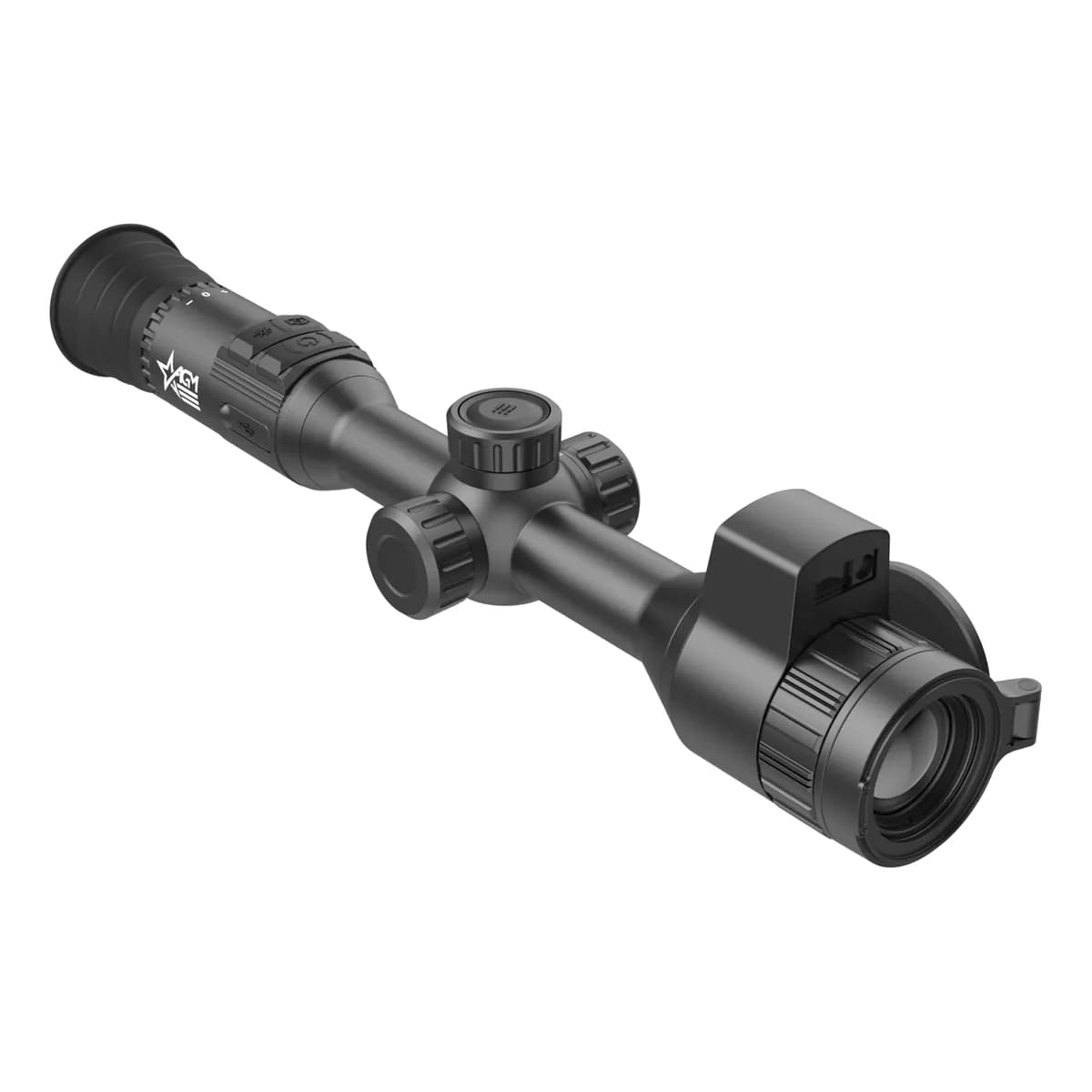
AGM Adder V2 LRF 35-640
- Sensor
- 640×512
- Pitch · Hz
- 12 µm · 50
- Lens
- 35 mm
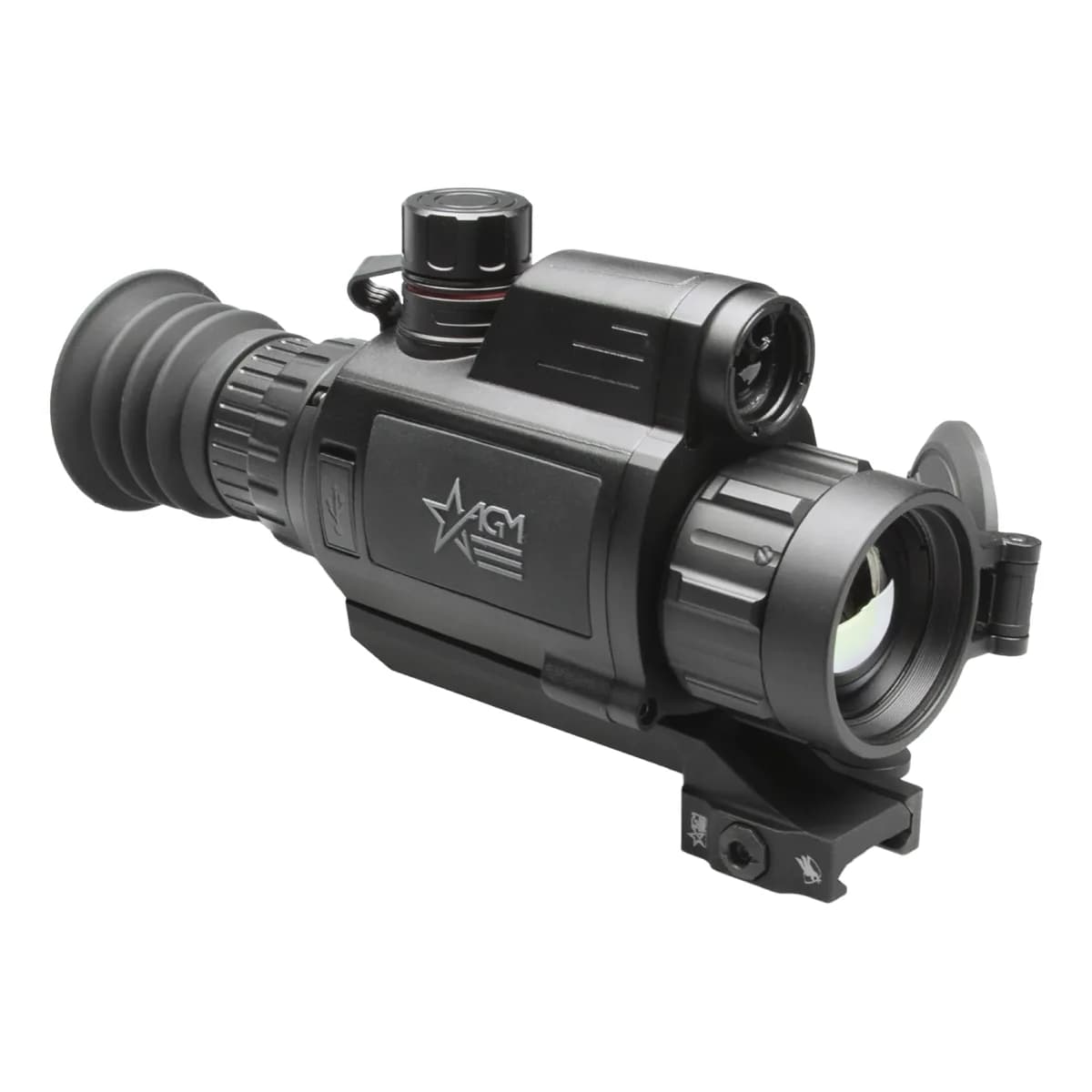
AGM Varmint V2 LRF 35-640
- Sensor
- 640×512
- Pitch · Hz
- 12 µm · 50
- Lens
- 35 mm
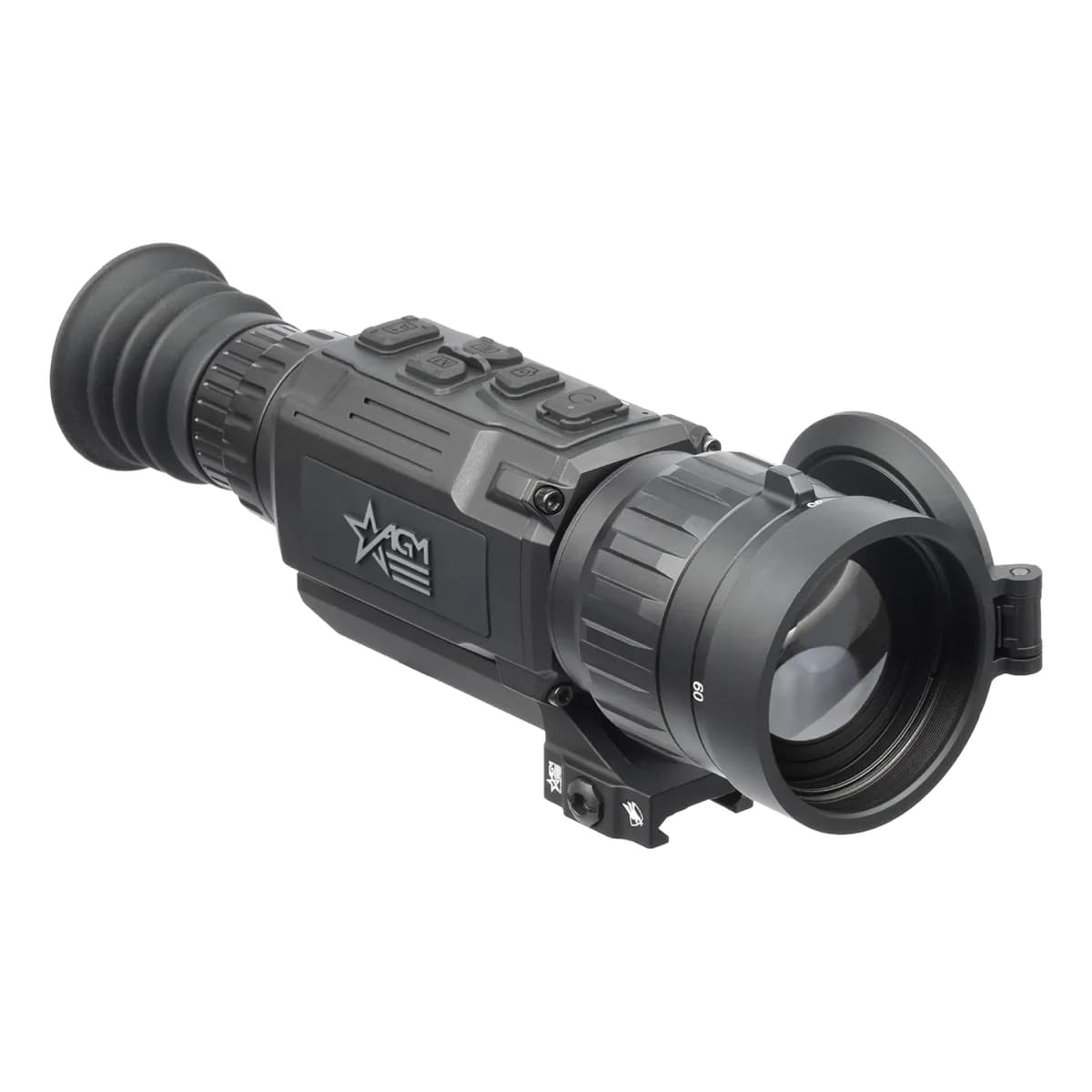
AGM Clarion 640
- Sensor
- 640×512
- Pitch · Hz
- 12 µm · 50
- Lens
- 35 mm